
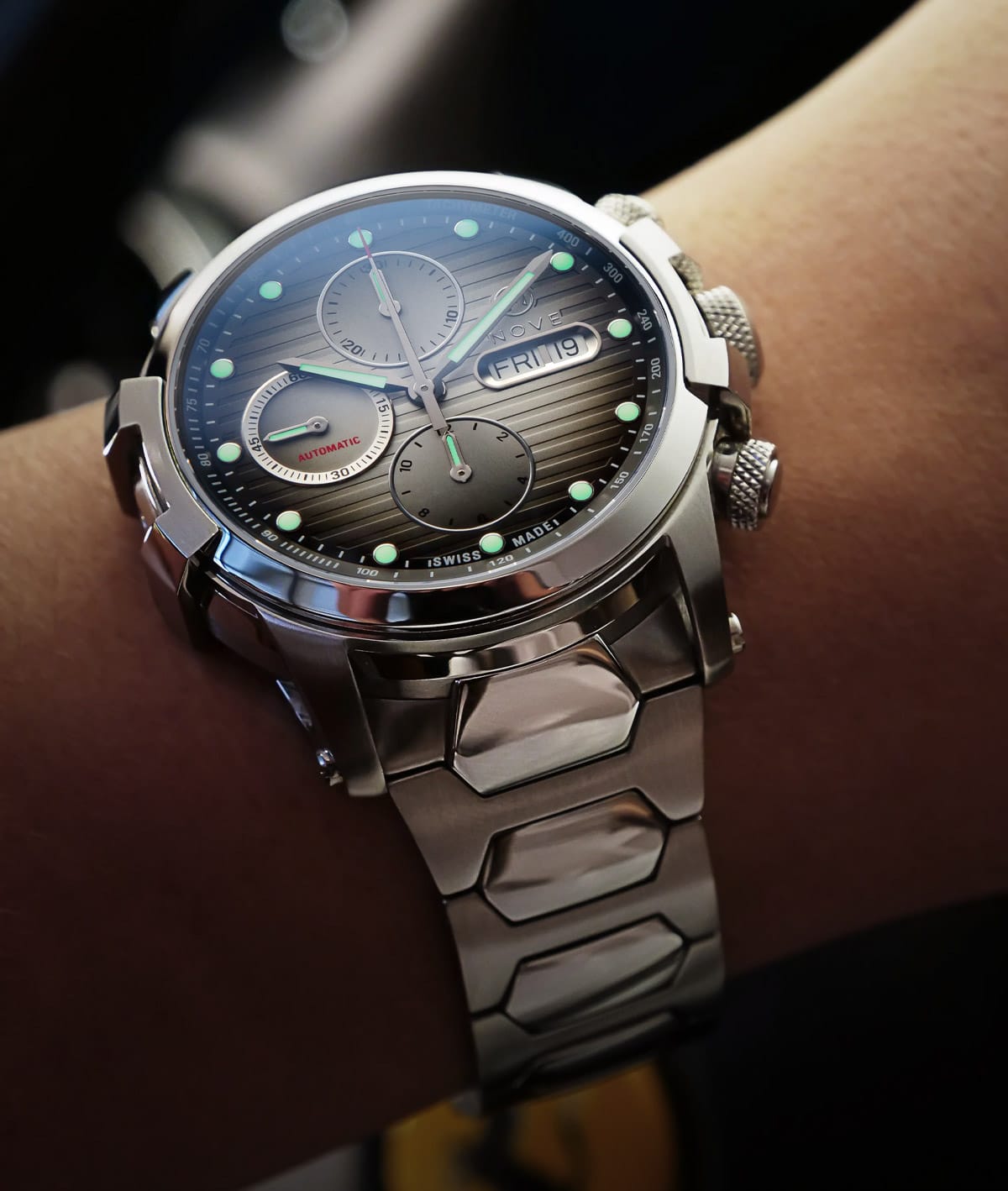
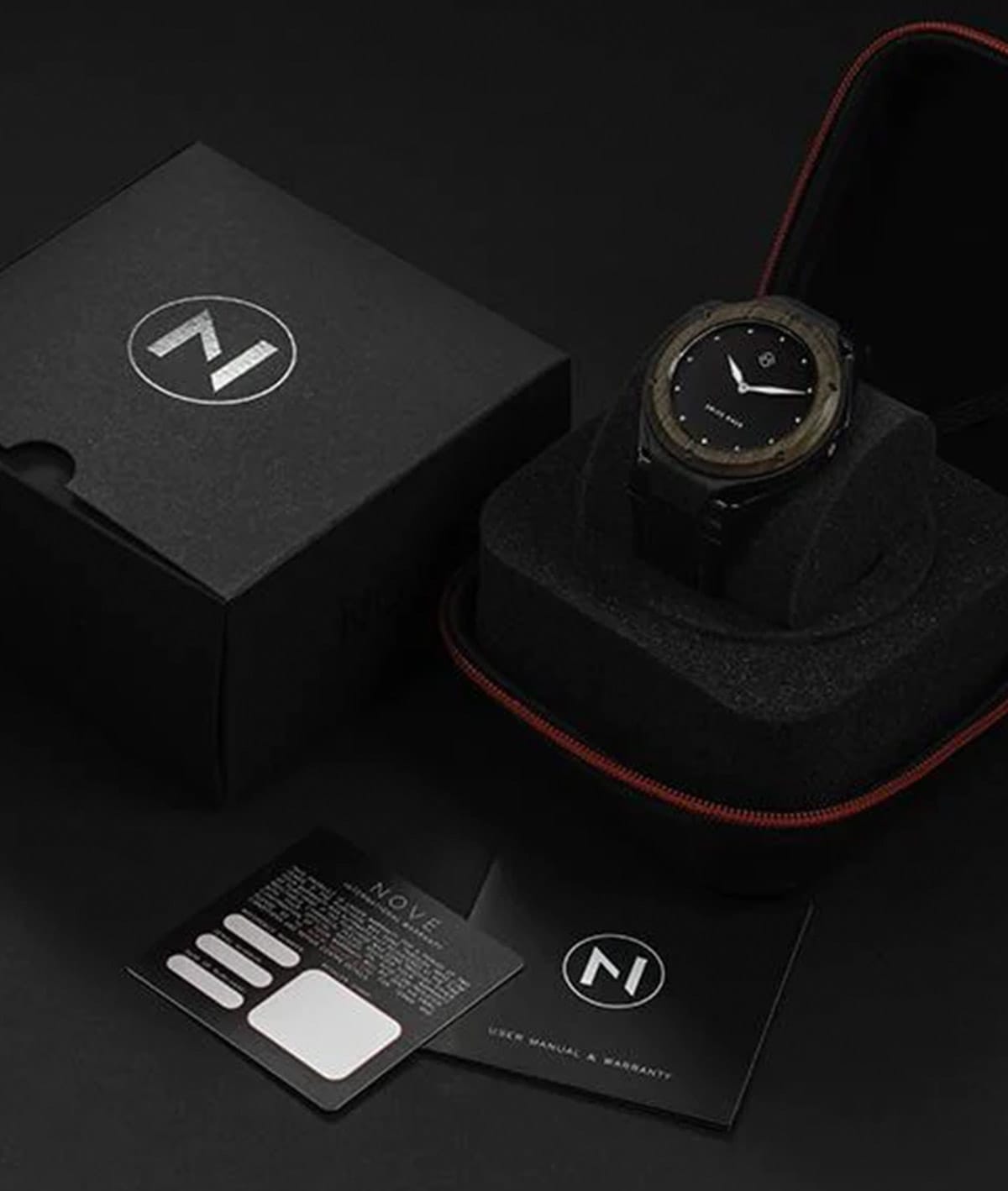
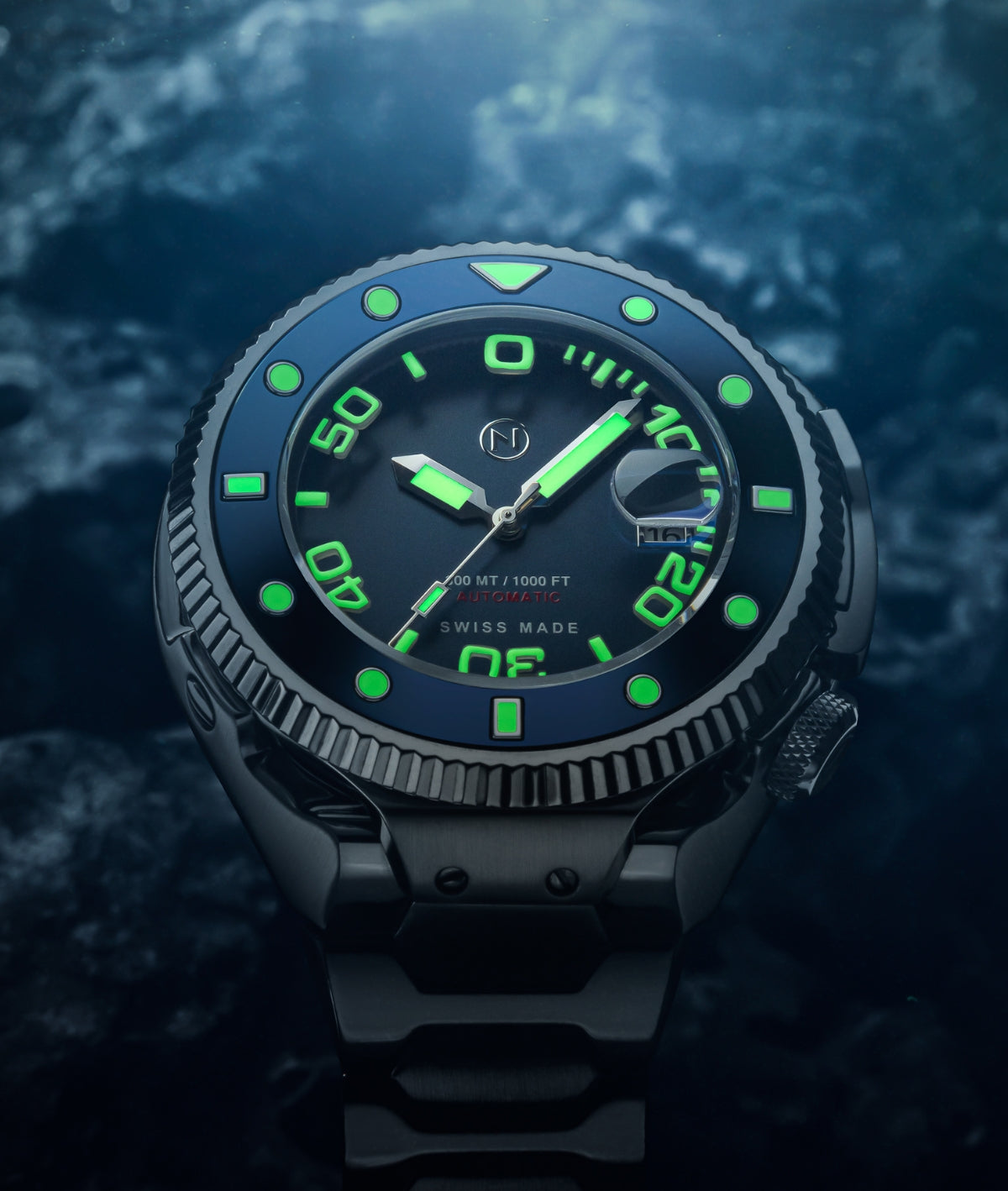
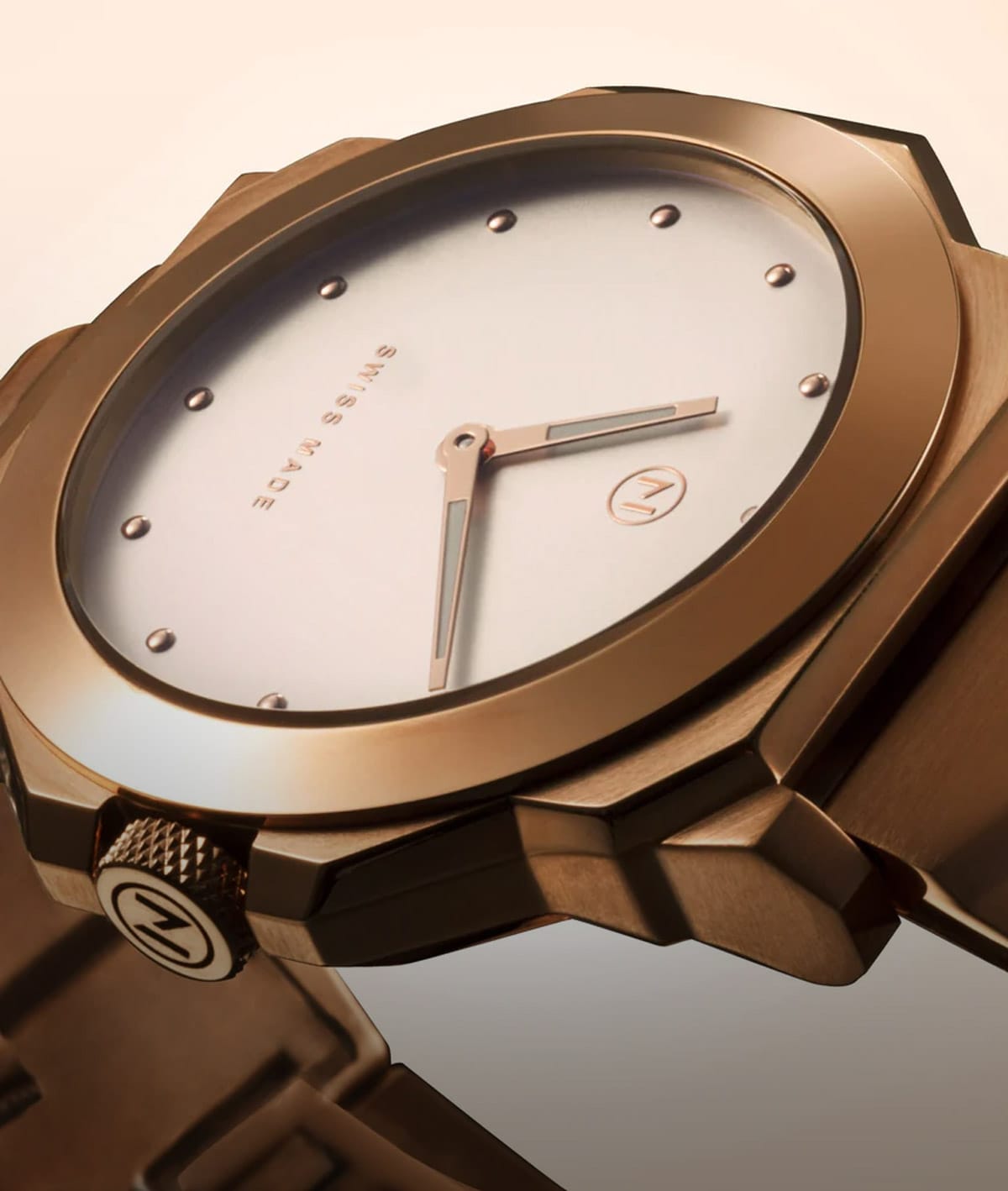
A chronograph is more than a stopwatch on the wrist. Its pushers, subdials, and sweeping or stepping central hand give a watch purpose, presence, and a distinctly mechanical sense of occasion. Yet the choice between an automatic chronograph versus quartz chronograph is not simply about which is better. It is about what you expect from the watch when it is resting in a drawer, crossing time zones, timing a lap, or catching the light beneath a cuff.
Both movements can deliver refined Swiss watchmaking and commanding design. Their differences are found in the experience of ownership: the energy that drives them, the accuracy they offer, the care they require, and the story they tell on the wrist.
Automatic Chronograph Versus Quartz Chronograph: The Core Difference
An automatic chronograph is powered by mechanical energy. As you wear it, a rotor moves with the motion of your wrist and winds the mainspring. That stored energy is released through a finely regulated system of gears, levers, and oscillations to keep time and operate the stopwatch function. It is a compact engine, built not around a battery but around physical craft.
A quartz chronograph uses a battery and a quartz crystal to regulate time. Electricity makes the crystal vibrate at a highly consistent frequency, and the movement converts those vibrations into precise timekeeping. Press the chronograph pusher, and an electronic circuit commands the timing mechanism.
That difference shapes nearly everything else. The automatic model offers visible heritage, mechanical theater, and a relationship with the wearer. Quartz offers instant readiness, exceptional accuracy, and uncomplicated confidence. Neither choice is a concession when it suits the way you live.
Why an Automatic Chronograph Feels Different
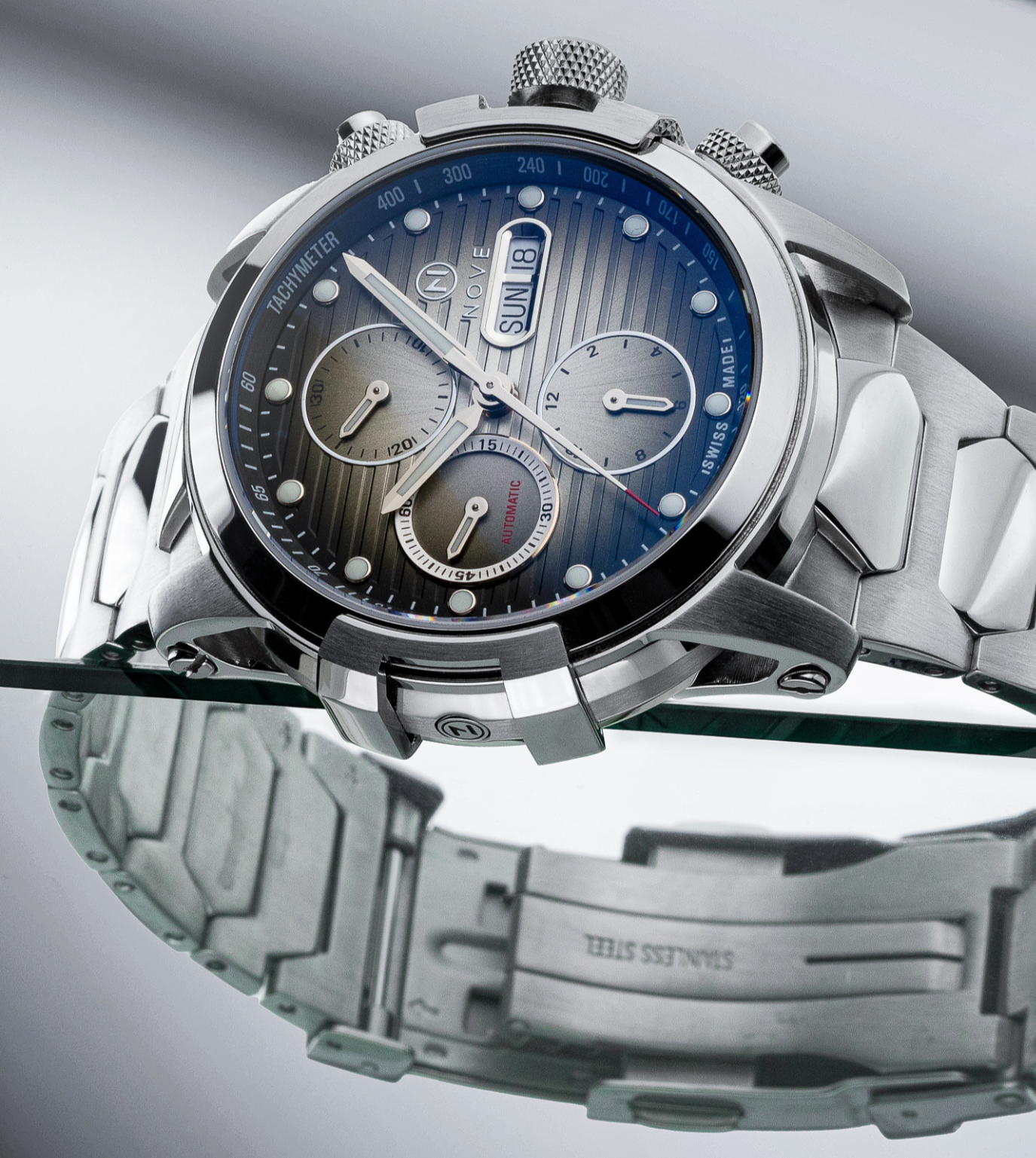
The appeal of an automatic chronograph begins with its complexity. A chronograph movement must not only keep time but also start, stop, and reset a separate timing system on command. In a mechanical version, this process is enacted by physical components working in concert. The tactile resistance of the pushers and the smooth motion of the chronograph seconds hand can make every use feel deliberate.
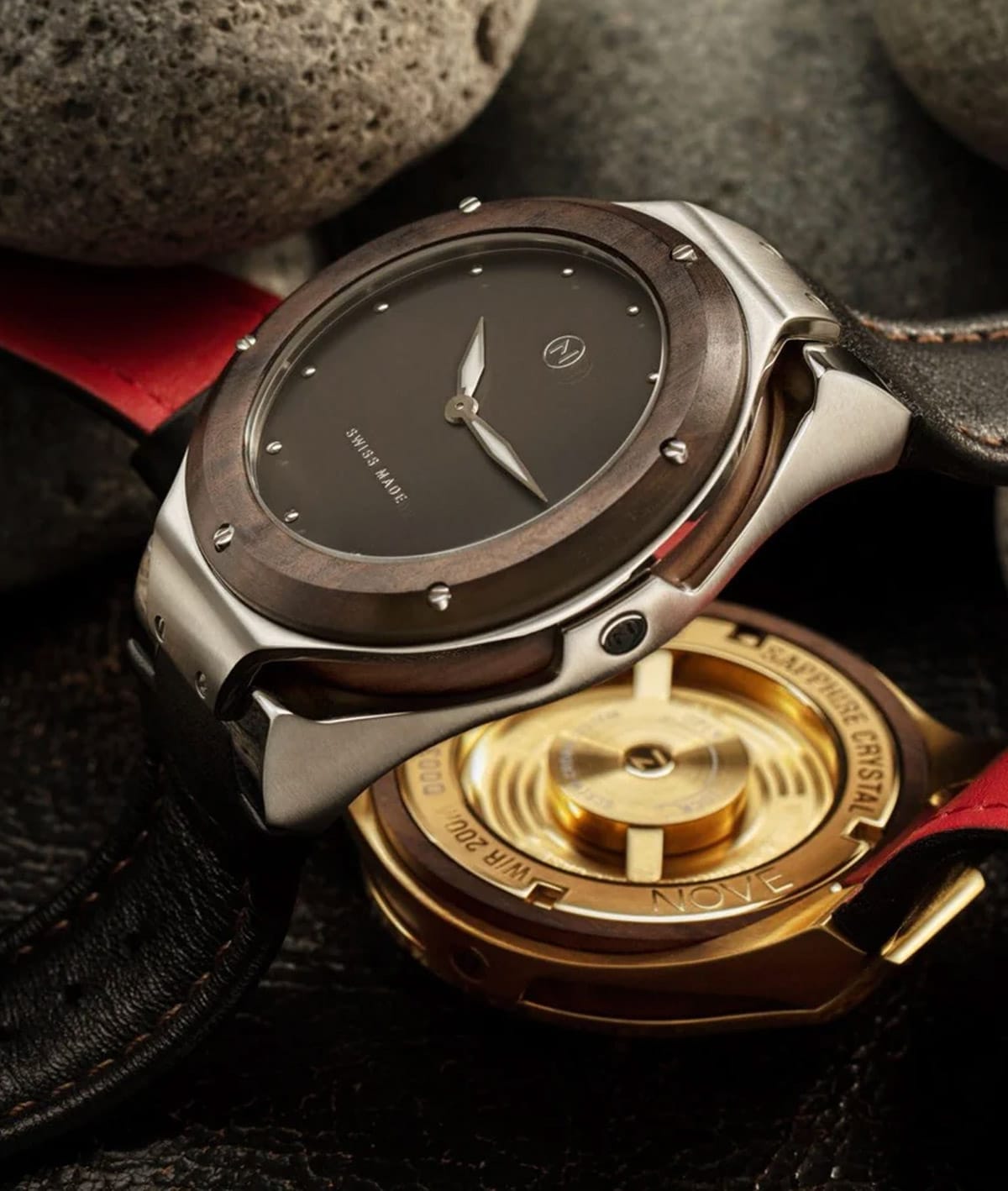
For collectors and design-minded wearers, that interaction matters. An automatic chronograph carries a living quality. It responds to motion, has a finite power reserve, and may reveal its mechanism through an exhibition caseback. The movement becomes part of the watch’s visual architecture, much like the sculpted bezel, dimensional dial, or considered finishing of the case.
Mechanical watches also have a particular emotional value as gifts and milestones. They can be serviced, preserved, and worn for decades. Their appeal is not based on being the most clinically precise instrument available. It comes from the extraordinary fact that hundreds of miniature parts can measure passing seconds through pure mechanical coordination.
There are practical considerations, however. Most automatic chronographs need regular wear or manual winding to remain running. If left unworn beyond their power reserve, they stop and require resetting. They are also generally thicker and heavier than quartz models because the mechanical movement occupies more space.
Mechanical accuracy is expressed as a daily rate rather than perfect second-by-second precision. Depending on the movement and conditions, an automatic watch may gain or lose several seconds per day. Magnetism, shocks, temperature, and position can all have an effect. For the wearer who enjoys setting a watch and engaging with it, these are characteristics of the format, not flaws.
Choose automatic when craftsmanship is the point
An automatic chronograph suits someone who sees a watch as an object of engineering and personal ritual. It belongs naturally in a rotation of meaningful pieces, on an expedition, at a celebration, or in a boardroom where distinction is found in details rather than volume.
It is especially compelling when you value the rhythm of ownership: winding the crown after a quiet weekend, setting the time before a flight, and feeling the mechanical click of the chronograph pushers before an important moment.
What Makes a Quartz Chronograph So Capable
A quartz chronograph brings a different kind of refinement. Its advantage is consistency. Quartz movements are typically accurate to within seconds per month, making them an excellent choice for anyone who wants a watch that is ready when needed, whether it has been worn yesterday or not for several weeks.
This convenience does not make quartz less worthy of a considered design. A quartz chronograph can carry the same bold dial layout, premium materials, water resistance, and Swiss-made pedigree as a mechanical counterpart. It simply directs its engineering toward precision and ease rather than mechanical spectacle.
The chronograph function itself can also be highly practical. Many quartz movements measure elapsed time with crisp, immediate operation, while certain models offer fractions of a second, extended timing capacity, or useful date displays. The central chronograph hand often advances in distinct one-second increments when timing, creating a sharp visual signature that feels purposeful and modern.
Quartz chronographs are often slimmer, lighter, and more accessible in price than automatic versions. That can make them an intelligent everyday choice, particularly for a wearer who wants a statement watch without the added thickness or maintenance expectations of a mechanical movement. For active schedules, travel, and frequent rotation among several watches, that reliability is luxurious in its own right.
The trade-off is battery replacement. Most quartz batteries last several years, though the exact interval depends on the movement and how often the chronograph is used. Replacing a battery is straightforward, but it should be done carefully by a qualified watch professional, especially when preserving water resistance. A pressure test after opening the case is a sensible precaution for a watch intended for aquatic adventure.
Choose quartz when precision must be effortless
A quartz chronograph is ideal for the wearer who wants accuracy without ceremony. It is the piece you can pick up before an early meeting, a weekend drive, or a dive trip and trust immediately. It also suits gift buyers well: the recipient receives a precise, striking watch that demands little from them beyond wearing it.
Comparing Ownership Beyond the Spec Sheet
The best choice becomes clearer when you look beyond movement labels. Consider how often you wear watches, what you notice when you look down at your wrist, and how much involvement you want from the piece.
If your watch is a daily companion and absolute punctuality matters, quartz has a strong case. It will keep accurate time through gaps in wear and asks very little in return. If you own several watches and switch between them frequently, quartz avoids the repeated resetting that comes with an automatic chronograph.
If you are drawn to the architecture beneath the dial, automatic offers depth that no specification alone can convey. The motion of a rotor, the crafted arrangement of bridges, and the controlled tension of a mechanical chronograph are reminders that precision can be made by hand, not only programmed into a circuit.
Maintenance deserves an honest comparison. Quartz watches need periodic battery changes and may eventually require electronic components to be replaced. Automatic chronographs generally require professional servicing at longer intervals, often around five to seven years depending on use, conditions, and the manufacturer’s guidance. Mechanical servicing is more involved and usually more expensive, but it is also part of preserving a serviceable object designed for the long term.
Water resistance is separate from the movement question. A properly engineered automatic or quartz chronograph can be suitable for water exposure, provided its rating supports the activity and its seals are maintained. Never operate chronograph pushers underwater unless the watch is expressly designed for that use.
Style, Status, and the Watch You Will Actually Wear
An automatic chronograph often signals an appreciation for traditional watchmaking. Its presence can feel substantial, with the case depth and dial detail expected of a miniature instrument. It rewards close inspection and pairs naturally with tailored clothing, leather, steel, and moments that call for a watch with a story.
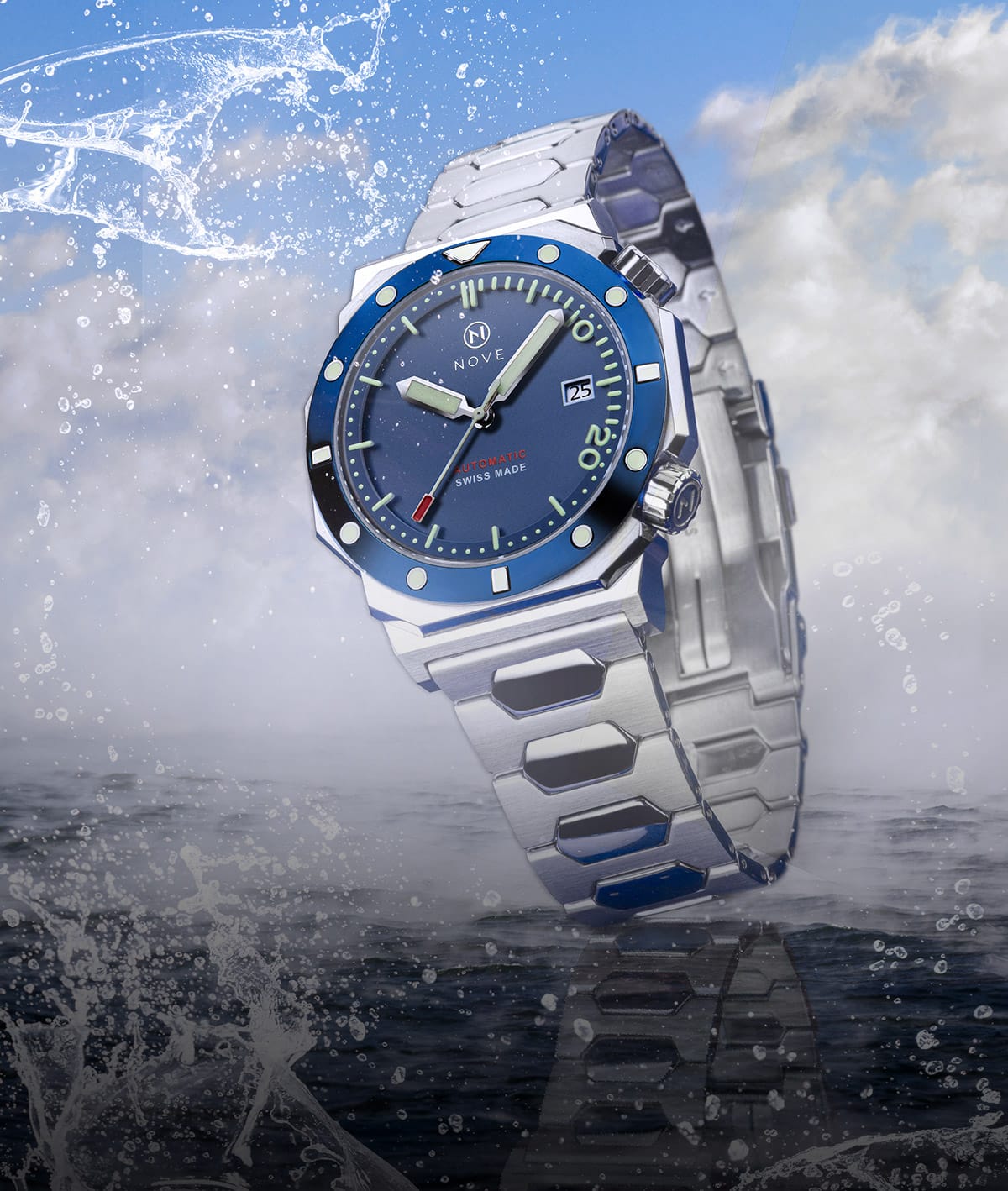
A quartz chronograph can be just as assertive, but its character is often more direct. It is a precision tool rendered as an accessory of confidence. In a bold, ocean-inspired case or an architectural everyday design, its movement leaves room for a watchmaker to prioritize proportions, wearability, and visual impact.
At NOVE, the most compelling watches are not defined by convention alone. They unite Swiss discipline with an appetite for the unexpected, allowing the movement to support the design rather than dictate the wearer’s identity.
Your budget may also influence the decision, and that is sensible. With quartz, more of the price can often be directed toward exceptional materials, dial work, case construction, and finishing. With an automatic chronograph, a meaningful portion reflects the movement’s added complexity. Decide which kind of value you will feel every time you wear it.
The right chronograph is the one that makes you reach for it. Choose automatic if the pulse of mechanical craft is what turns a watch into a personal masterpiece. Choose quartz if enduring precision and immediate performance fit the rhythm of your life. Then wear it often enough for its marks, memories, and measured moments to become entirely your own.