
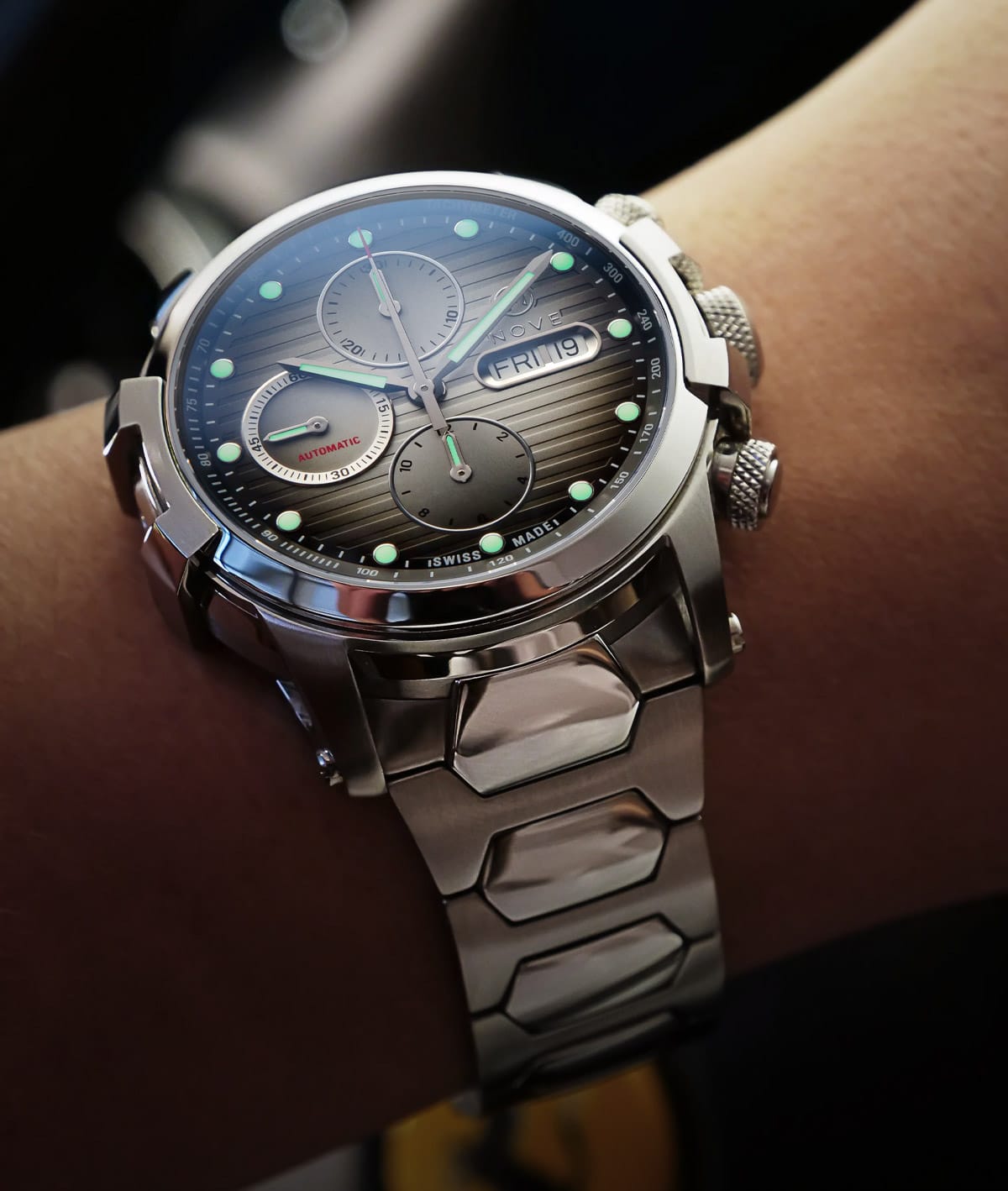
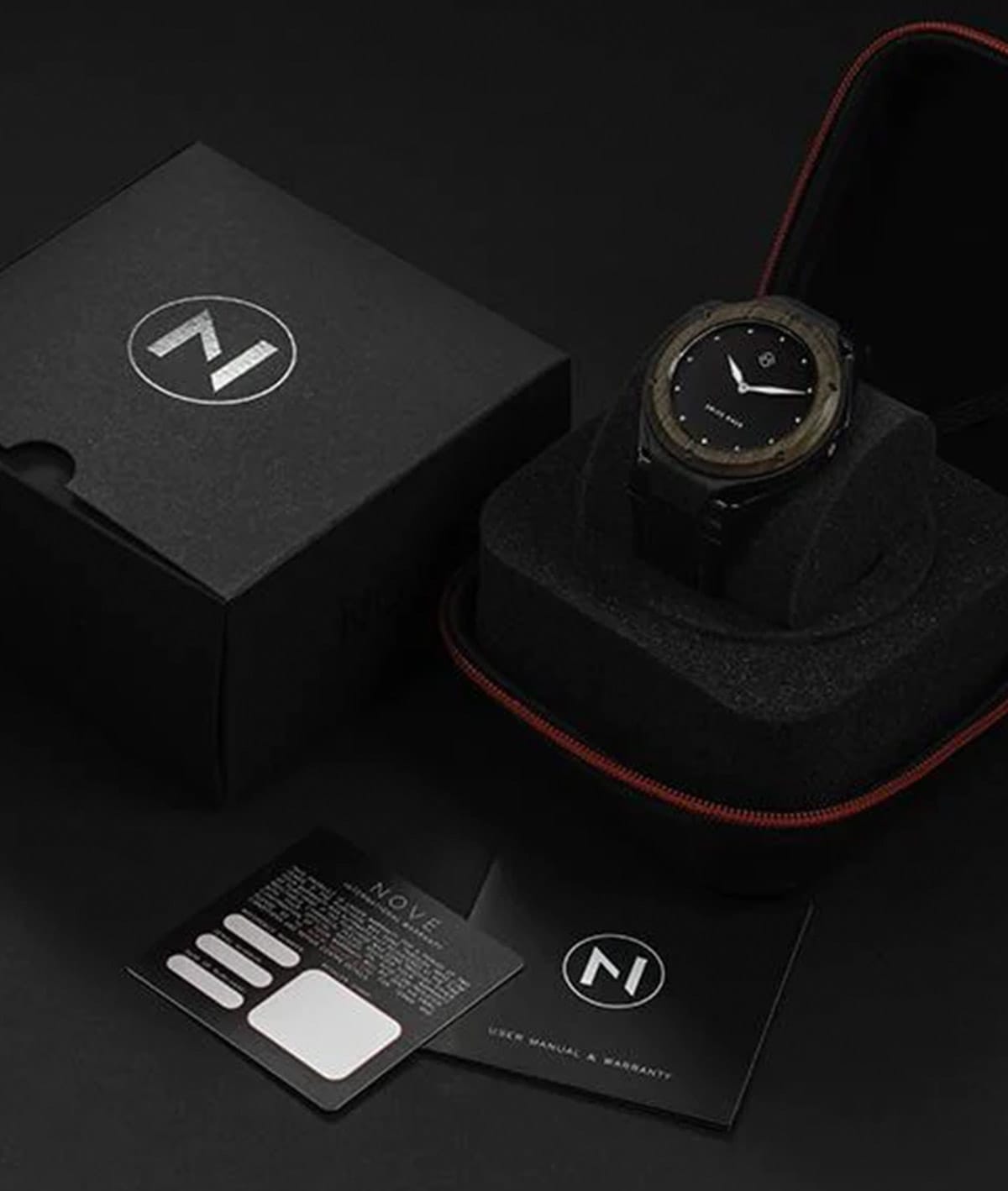
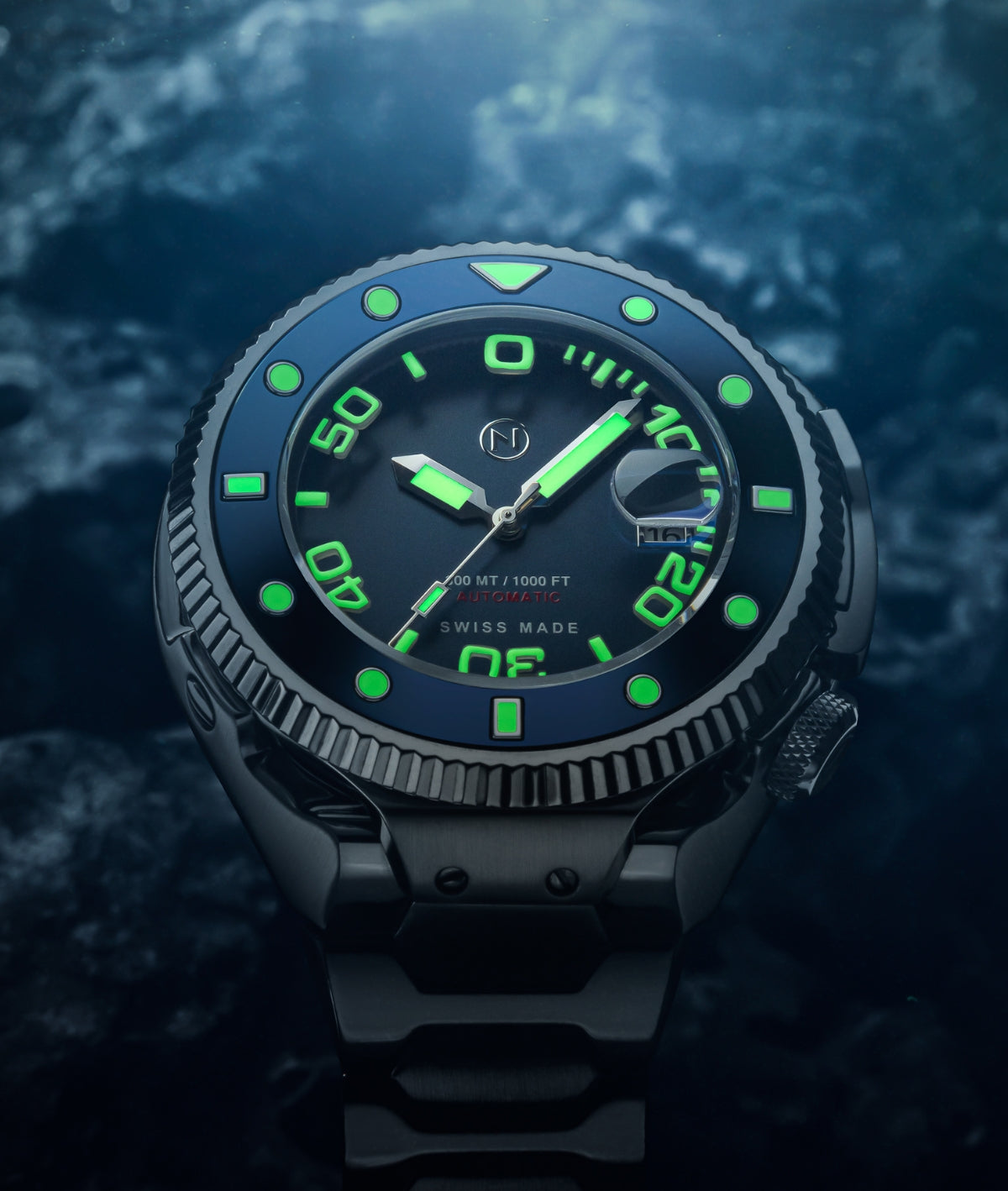
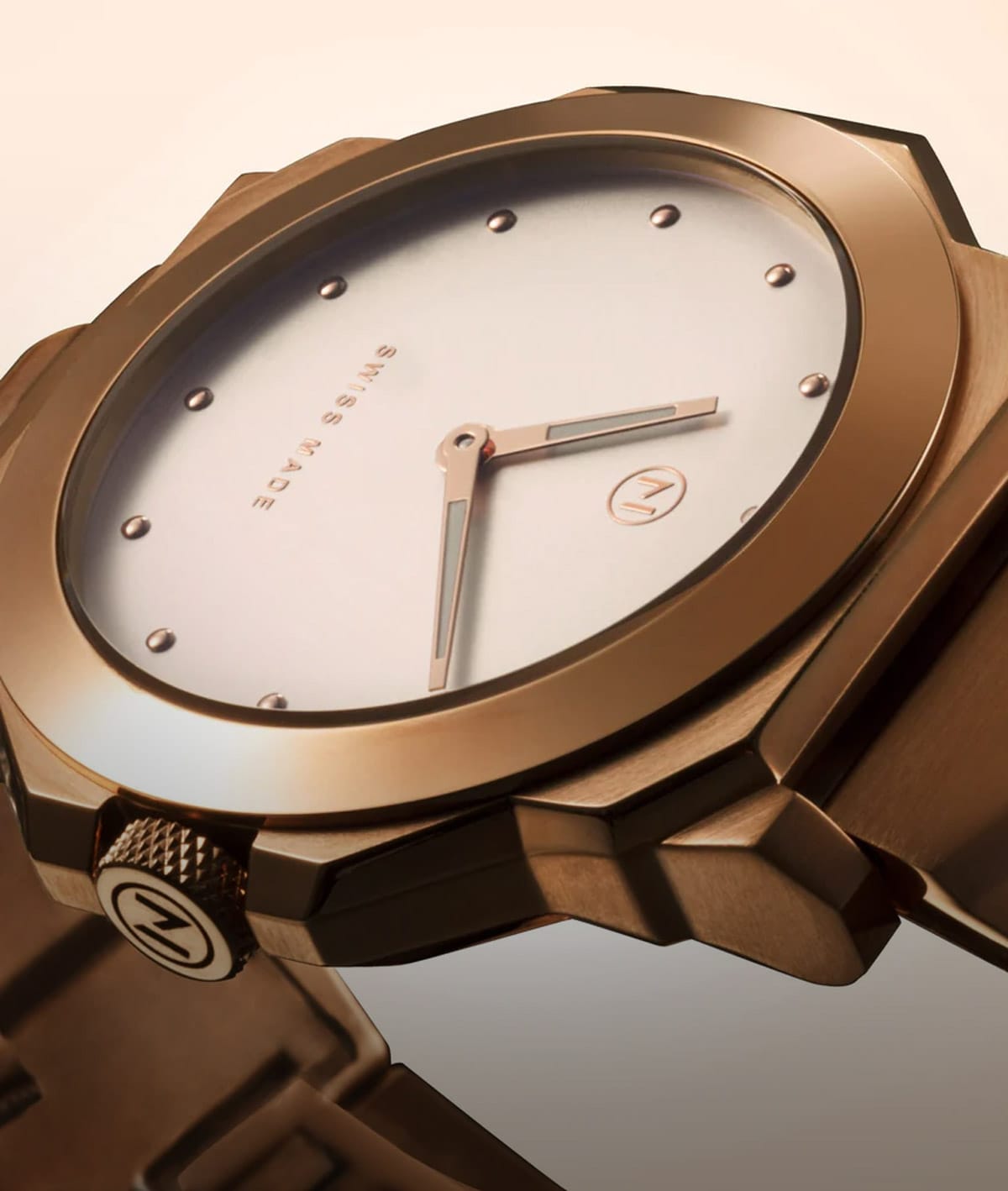
A great watch announces itself before anyone reads the dial. You notice the silhouette first, then the way light moves across the case, then the tension between restraint and attitude. That is the appeal of modern swiss watch design - it respects the discipline that made Swiss watchmaking iconic, but it refuses to stay trapped in nostalgia.
For buyers who want more than a polite nod to heritage, this shift matters. The modern Swiss watch is no longer defined only by thin dress cases, conservative dials, or quiet lineage. It is increasingly shaped by architectural forms, bolder proportions, advanced materials, sharper finishing, and a clear point of view. A watch still needs precision. It still needs integrity. But now it also needs presence.
The Real Idea Behind Modern Swiss Watch Design
At its best, modern Swiss watch design is a balance of tension. It brings together old-world craftsmanship and contemporary identity without letting one dilute the other. That sounds simple until you see how often brands miss the mark.
Lean too hard on history and the result can feel predictable. Push too far into novelty and the watch risks becoming a short-lived statement rather than a lasting object of refinement. The strongest modern designs understand that innovation is not decoration. It is a disciplined rethinking of form, function, and wearability.
This is why the category has become so compelling. Today’s buyer is not impressed by heritage alone. He wants a watch with Swiss credibility, but he also wants originality on the wrist. He wants engineering that performs and design that says something precise about his taste. Not loud for the sake of loud. Distinct because every detail has intention.
Why Modern Swiss Watch Design Looks Different Today
Swiss watchmaking has always been associated with excellence, but the visual language has changed because the audience has changed. People are dressing differently, buying differently, and wearing watches for different reasons than they did twenty years ago.
A mechanical watch is no longer the default tool for telling time. That job belongs to the phone in your pocket. Which means the watch now has to earn its place through experience, craftsmanship, and emotional force. Design carries more weight because the object itself carries more meaning.
That has opened the door to stronger case geometry, more expressive dials, deeper textures, integrated bracelet influences, performance-driven builds, and sport-luxury crossover pieces that can move from a boardroom to a weekend coastline without apology. The modern Swiss watch is not trying to disappear under a cuff. In many cases, it is meant to become the defining element of the look.
Form Still Follows Function - But Function Has Expanded
Traditional Swiss design often treated functionality in narrow terms. Water resistance, legibility, durability, and movement quality were the essentials. Those still matter. In fact, they matter more when a watch aims to justify a premium position.
But function now includes how a watch feels in motion, how it sits across different wrist sizes, how quickly the dial can be read in varied light, and how naturally it transitions between occasions. A dive watch, for example, may still be built for serious performance, yet it also needs enough visual refinement to feel at home with tailored clothing. That duality is one of the signatures of current Swiss design.
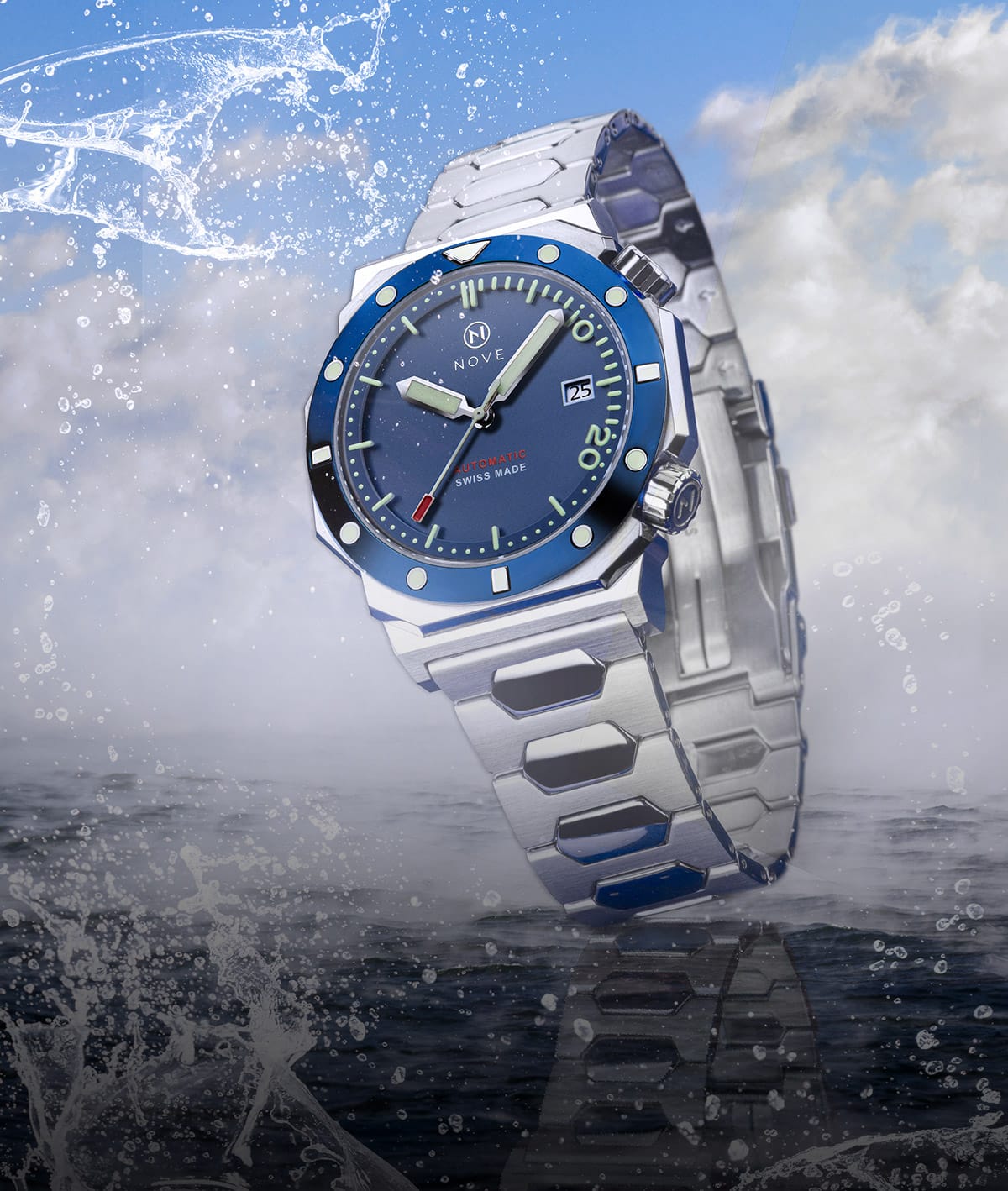
The best pieces do not force a choice between utility and character. They build both into the architecture. A strong bezel is not just practical. It can frame the dial with drama. A robust case is not simply protective. It can create a commanding profile. Even lume, crown guards, and bracelet links can become part of the watch’s identity when executed with discipline.
Case Design Is Where Modernity Speaks Loudest
If you want to understand whether a watch truly feels modern, start with the case. This is where many contemporary Swiss brands separate themselves from conservative competitors.
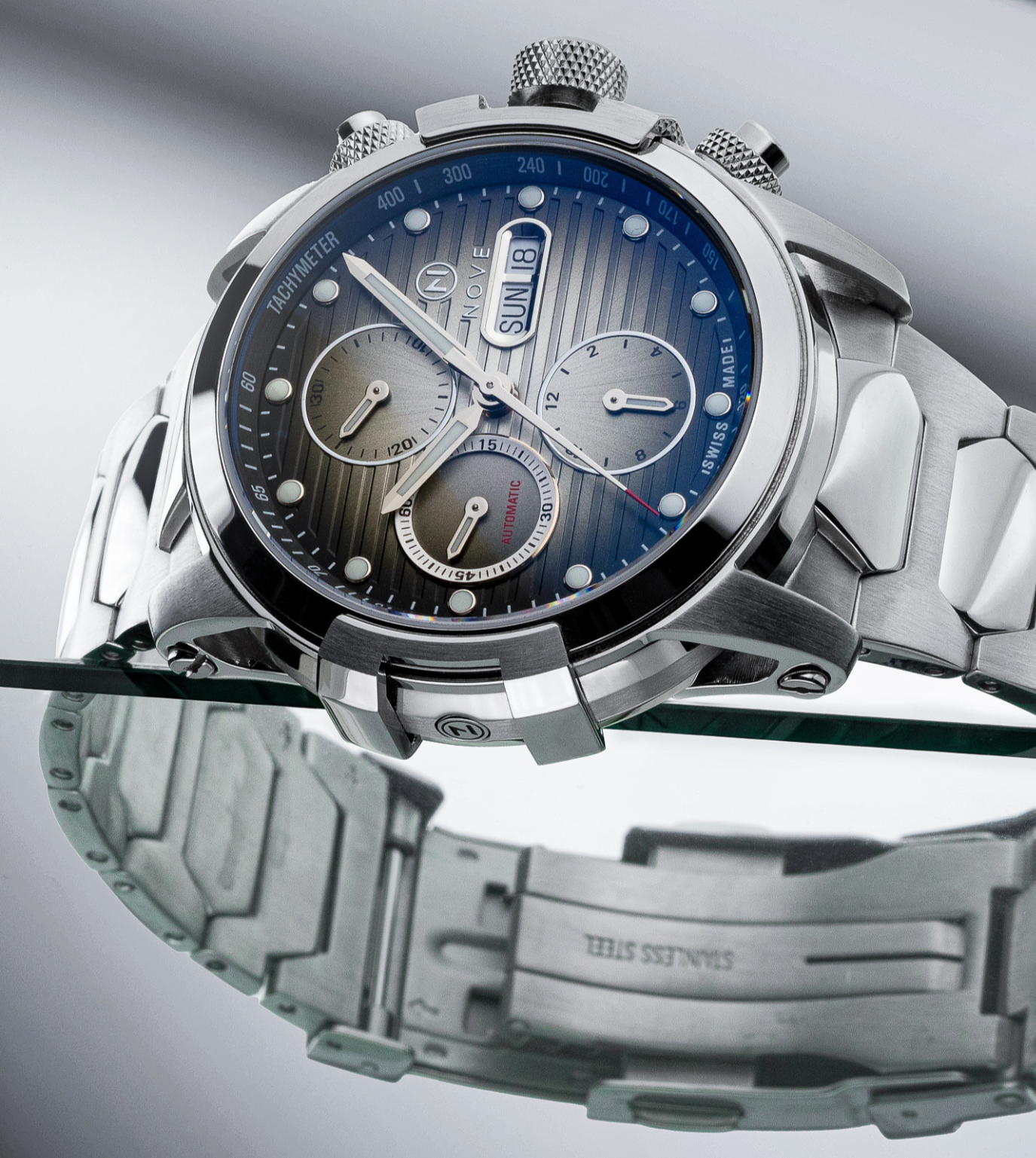
Modern cases tend to be more sculptural. Edges are sharper or more purposeful. Brushed and polished surfaces are used to create contrast rather than mere decoration. Lugs may taper more aggressively, integrate more smoothly, or disappear into the form altogether. The goal is not complexity for its own sake. It is visual rhythm.
This is especially powerful in sport and dive watches, where the case has to communicate strength without becoming blunt. A well-designed modern case feels engineered, not bulky. It has stance. It catches light with intention. It wears with authority.
Dial Design Has Become More Architectural
Dials in modern Swiss watch design often favor depth over clutter. You see layered construction, dimensional markers, applied indices, textured surfaces, and carefully controlled color. Even minimalist dials are rarely flat in spirit. They use spacing, proportion, and surface treatment to create quiet drama.
That matters because the dial is where personality lives. A traditional dial can be beautiful, but a modern one often feels more immersive. It brings a sense of motion and structure to the watch. The wearer does not just read it. He experiences it.
There is also more confidence in contrast now. Matte against polished. Dark surfaces against luminous markers. Industrial textures against refined finishing. These choices make a watch feel contemporary without sacrificing elegance.
Materials Are Part of the Design Language
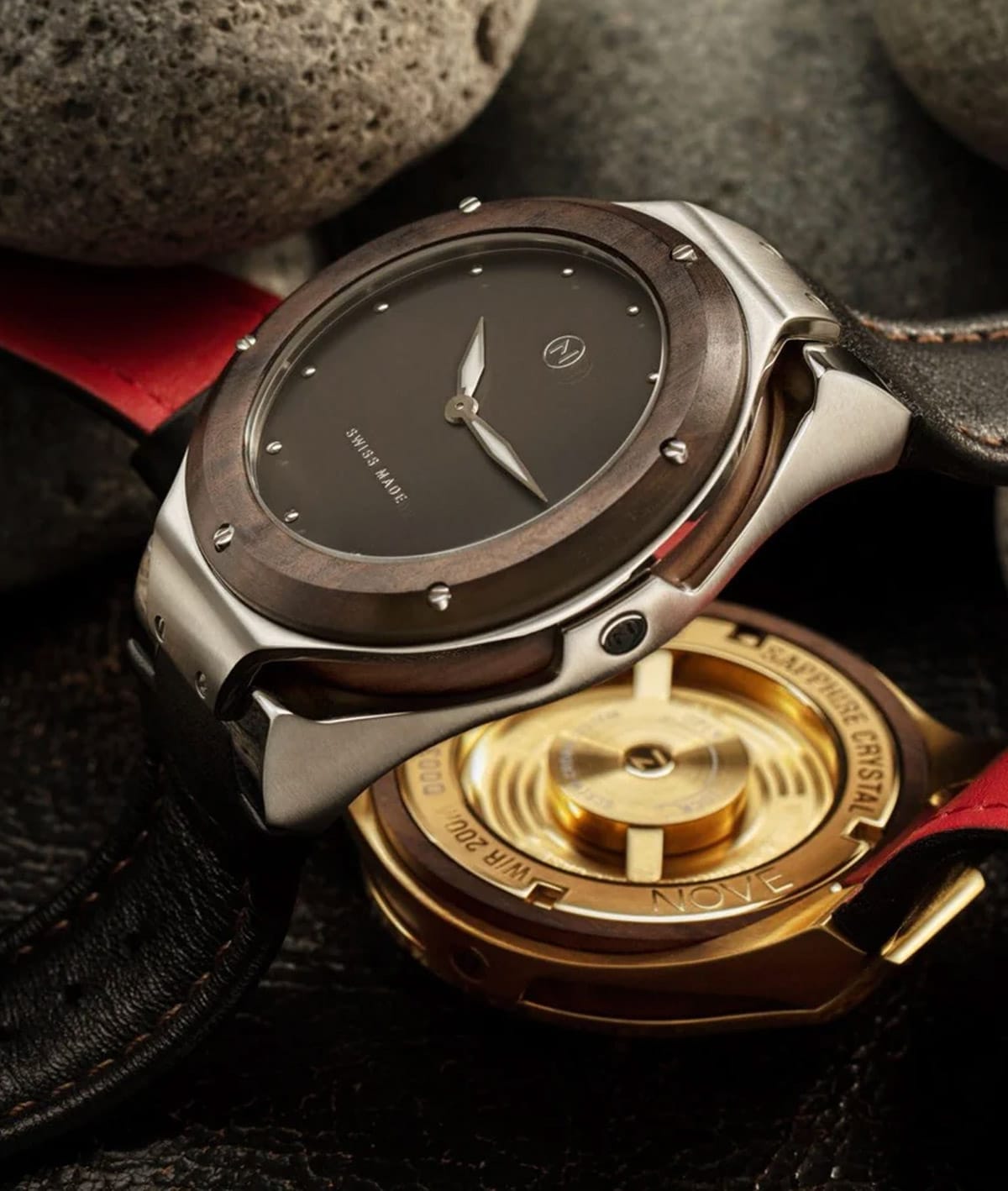
Modernity is not just about shape. It is also about what the watch is made from and how those materials are expressed. Stainless steel remains central because of its strength and versatility, but current Swiss design often pushes further with ceramic elements, sapphire details, advanced coatings, and more nuanced finishing techniques.
This does two things at once. It improves durability and deepens the emotional quality of the watch. A sharply brushed steel case feels different from a highly polished one. A ceramic bezel insert changes the visual temperature of the piece. Sapphire can add clarity and a more elevated presence.
Material choice also signals intent. A watch designed for adventure should look prepared for it. A watch positioned as a daily luxury piece should still show resilience, not fragility. That is one reason modern buyers respond so strongly to premium tool-watch aesthetics. They project competence, but in a polished form.
Heritage Still Matters - Just Not in the Old Way
There is a misconception that modern Swiss design rejects tradition. It does not. It simply uses tradition more selectively.
The strongest contemporary brands understand that heritage should be a foundation, not a script. Swiss-made value still comes from disciplined construction, movement reliability, finishing standards, and manufacturing integrity. Those are not optional. They are the reason the category holds its prestige.
What has changed is how openly designers reinterpret those values. Instead of repeating familiar codes, they reshape them for a buyer who wants heritage with edge. That could mean a more assertive case profile, a bolder dial layout, or a dive-inspired watch elevated into a design object. The point is not rebellion for its own sake. The point is relevance.
For a brand like NOVE, this is exactly where the opportunity becomes exciting. Swiss watchmaking gains new energy when craftsmanship meets unusual, fearless design rather than resting on convention alone.
What Buyers Should Look For in Modern Swiss Watch Design
A watch can photograph well and still feel generic in person. That is why discerning buyers should look beyond trend language and focus on whether the design has coherence.
First, study proportion. Does the case diameter match the thickness and lug-to-lug length, or does the watch feel inflated? Modern design often embraces presence, but presence should never come at the cost of balance.
Next, look at finishing. Strong design is reinforced by transitions between brushed and polished surfaces, crisp edges, and thoughtful contrasts. If the finishing is vague, the watch will lose impact quickly.
Then consider whether the watch has a distinct identity from a distance. Many pieces borrow familiar cues, but the memorable ones create a silhouette and dial character that feel unmistakably their own. This is where real design confidence shows.
Finally, ask how it fits into your life. Some modern Swiss watches are statement pieces first and everyday companions second. Others manage both. Neither approach is wrong. It depends on what you want from the watch. If it is meant to be worn often, comfort, legibility, and versatility matter just as much as visual drama.
The Future of Modern Swiss Watch Design
The future is unlikely to become quieter. Buyers have become more design literate, more visually selective, and less patient with safe repetition. They still want Swiss precision, but they also want a watch that reflects independence and discernment.
That does not mean every case will become oversized or every dial more aggressive. In fact, the next evolution may be more refined than extreme. Cleaner lines, smarter use of materials, stronger ergonomics, and more original forms are likely to matter more than spectacle alone. The watches that endure will be the ones that feel daring and resolved at the same time.
That is the promise at the center of this category. Modern Swiss watch design is not about abandoning the codes of excellence. It is about giving them sharper form, stronger character, and a place in contemporary life. Choose a watch that does more than reference the past. Choose one that feels alive on the wrist and unmistakable every time you turn your hand toward the light.