
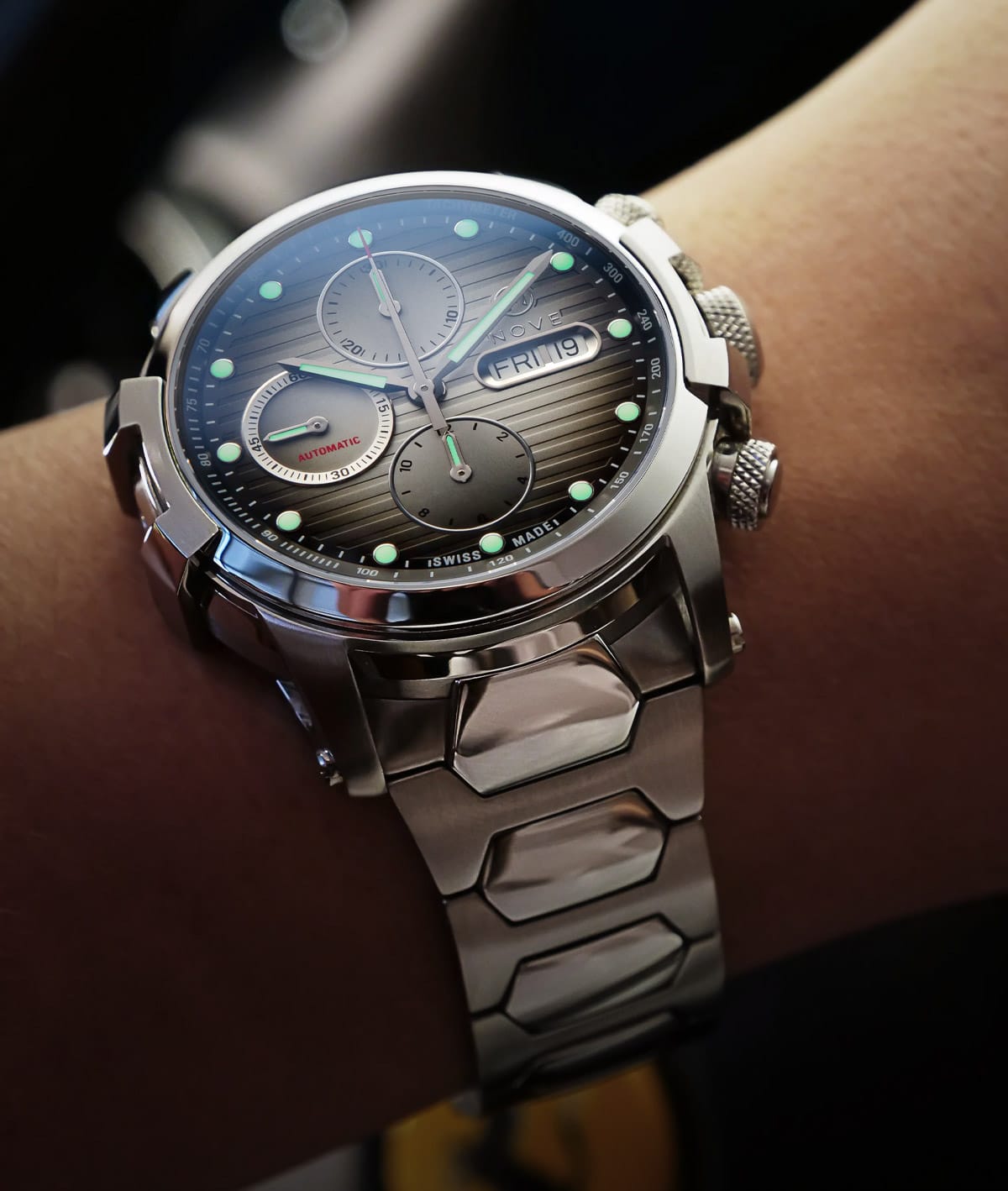

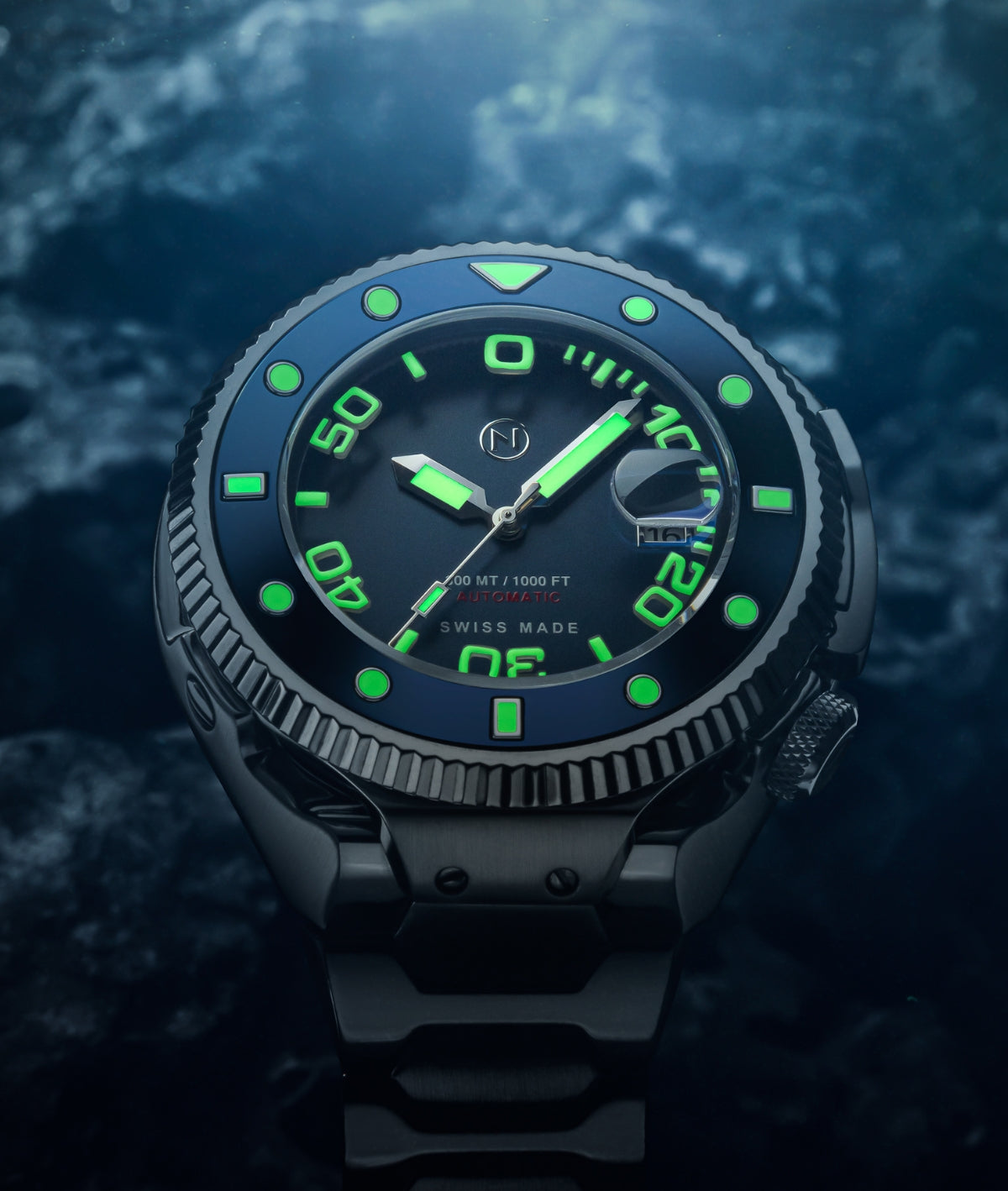
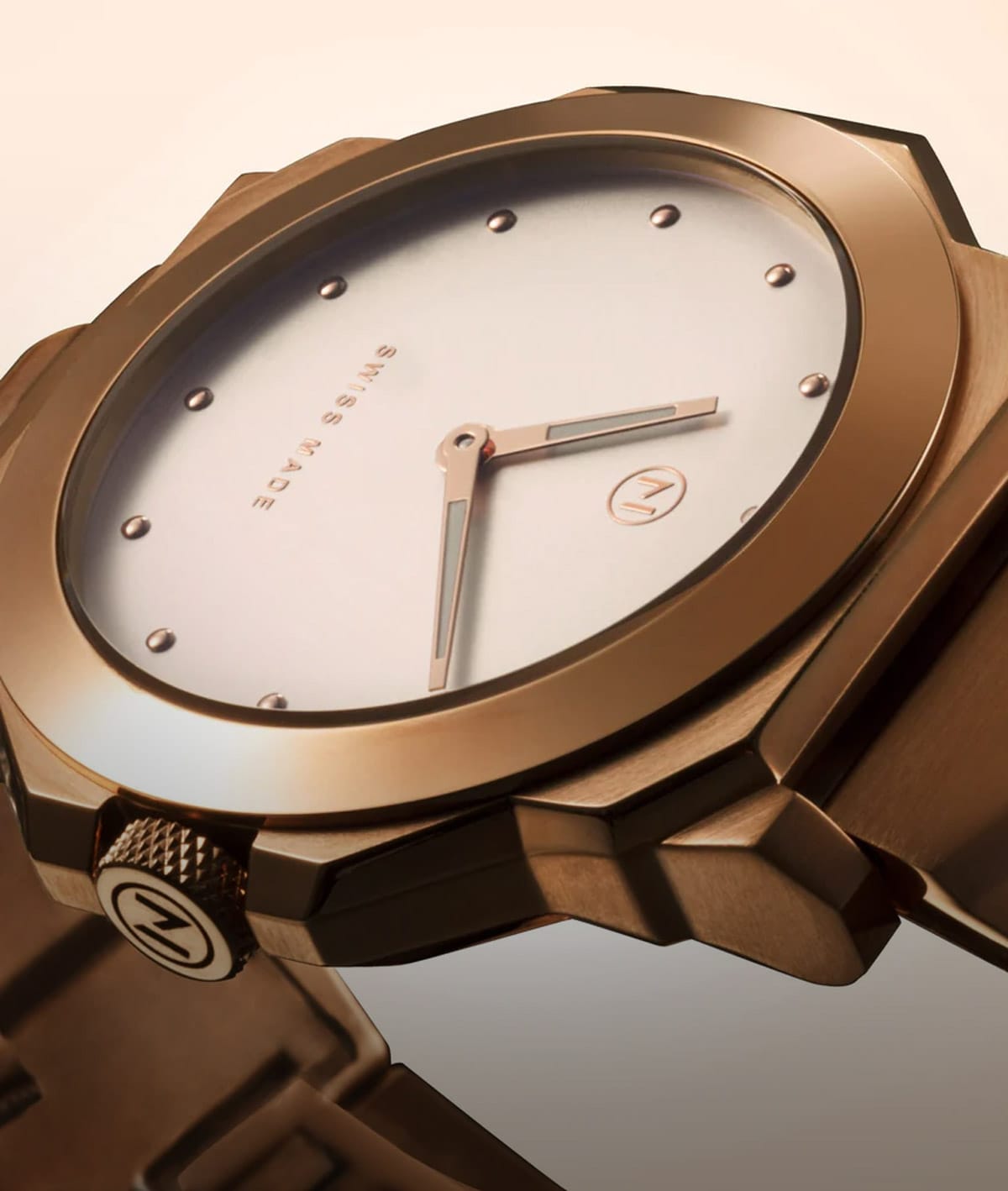

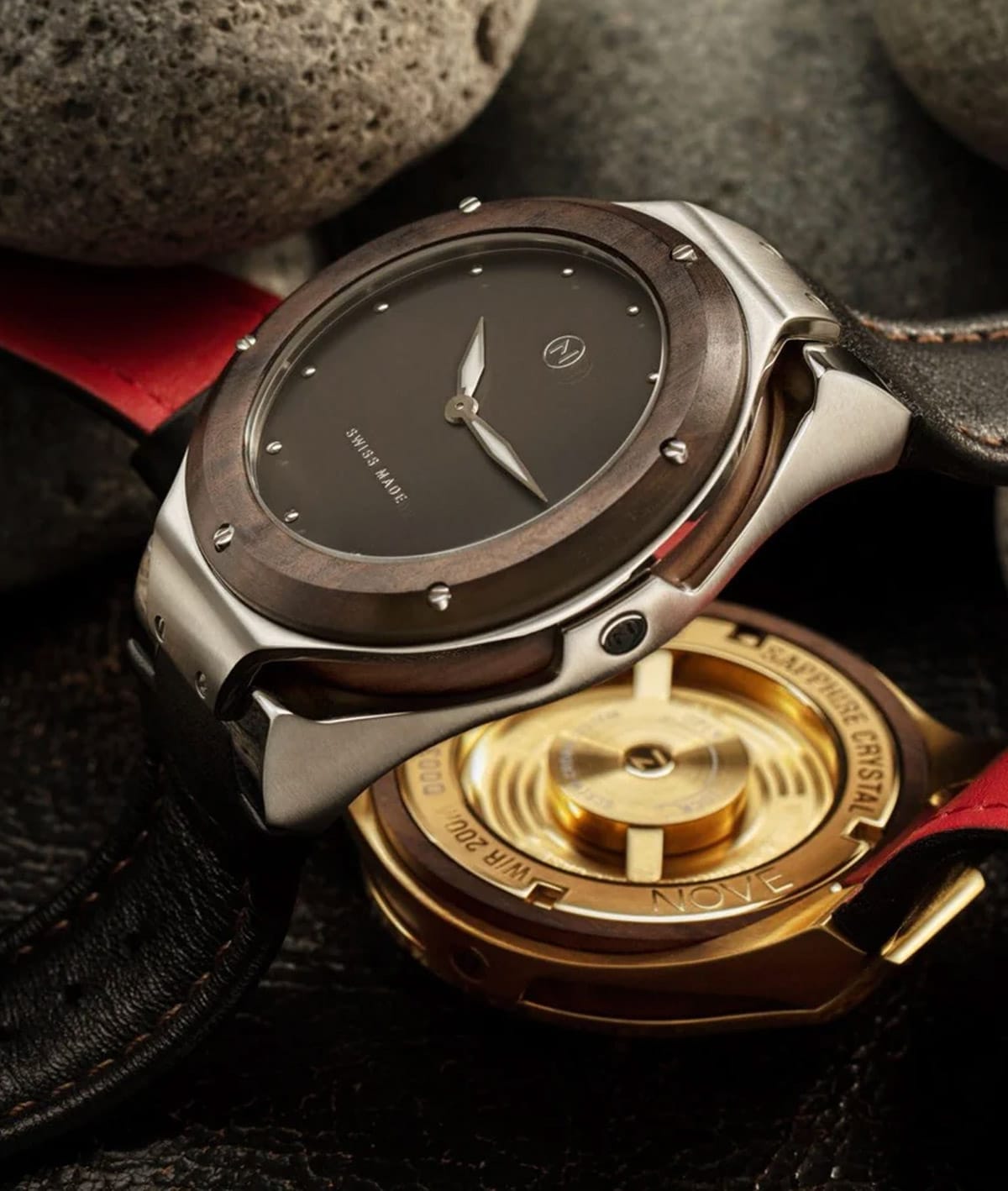
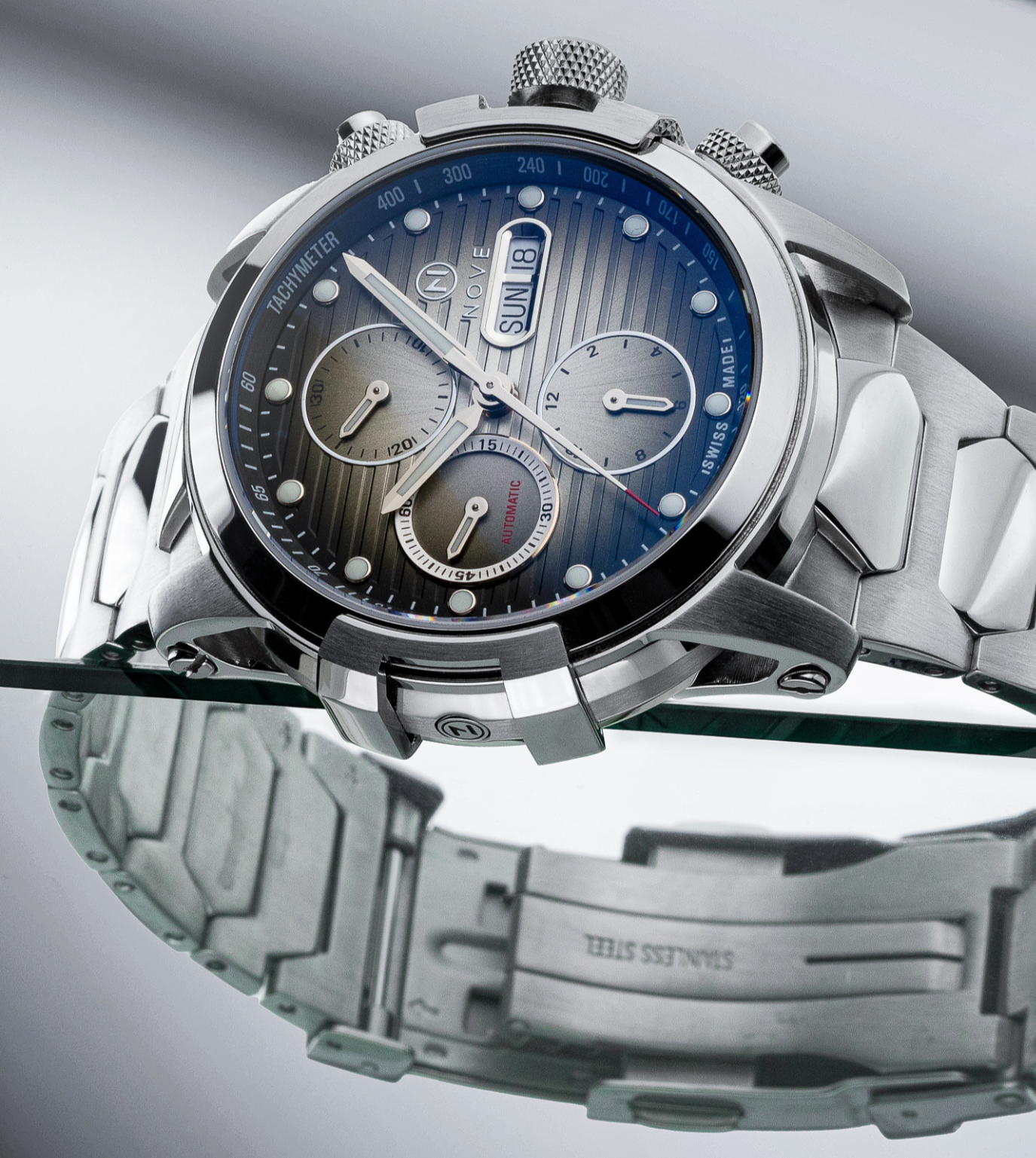
An automatic watch is designed to turn motion into timekeeping energy - but that does not mean it will run forever without attention. So, do automatic watches need winding? Yes, sometimes. Your daily movement usually keeps one running, while a watch that has been resting in a drawer will need a little help before it returns to your wrist.
That balance is part of the appeal. An automatic movement is a compact mechanical masterpiece, powered not by a battery but by the rhythm of real life: a commute, a meeting, a weekend by the water, an evening out. Understanding how it works helps you wear it with confidence and care for it as the precision instrument it is.
How an Automatic Watch Powers Itself
Inside an automatic watch is a mainspring, which stores the energy needed to drive the hands and keep the movement operating. A weighted rotor sits above the movement and swings as your wrist moves. That motion winds the mainspring through a series of gears.
Wear the watch regularly and the rotor replenishes its power reserve throughout the day. The power reserve is simply the amount of running time available once the watch is no longer being worn. Depending on the movement, many Swiss automatic watches offer roughly 38 to 72 hours of reserve, though some specialized movements run longer.
This is why an automatic watch can keep time overnight on a nightstand, then be ready the next morning. It is also why it may stop after a few days off the wrist. Nothing is broken. Its stored energy has simply been used.
Do Automatic Watches Need Winding by Hand?
An automatic watch does not need daily hand winding if you wear it enough to maintain its power reserve. For most owners, normal wrist movement is sufficient. Still, hand winding is useful in two common moments: when the watch has stopped after sitting unworn, and when you want to give it a strong starting charge before wearing it.
If your watch has stopped, gently wind the crown in its normal winding position before setting the time. Around 20 to 40 slow turns is often enough to wake the movement and establish a useful reserve. The exact number varies by caliber, so the instruction manual for your specific model remains the final authority.
Once the movement is running, put the watch on and let the rotor take over. You do not need to keep manually winding it every morning. In fact, the point of an automatic movement is to make daily wear part of the mechanism's energy source.
A useful distinction: hand winding starts the watch, while wrist motion maintains it. They work together, but they are not interchangeable in every situation. If a watch spends most of its life on a desk while you type, its rotor may receive less motion than it would during an active day. A brief manual wind can be practical in that case.
Can You Overwind an Automatic Watch?
This is one of the most persistent questions in mechanical watch ownership. In most modern automatic watches, routine winding will not overwind the mainspring in the way many people imagine. Automatic movements generally use a slipping bridle system that allows the fully wound mainspring to release excess tension safely as the rotor continues to move.
That said, care still matters. Wind the crown slowly and deliberately. Do not force it if you encounter unexpected resistance, grinding, or roughness. A crown and winding stem are refined components, not something to treat with the force of a tool.
There is also no reward for excessive winding. If the watch is already running and you wear it regularly, adding dozens of unnecessary crown turns does not make it more accurate or more durable. It simply adds avoidable handling.
The Right Way to Wind an Automatic Watch
Begin with clean, dry hands and make sure the watch is not in water. If it has a screw-down crown, unscrew it carefully until it releases to the winding position. Turn the crown upward, toward 12 o'clock, using smooth and controlled rotations. After approximately 20 to 40 turns, set the time and any other functions according to the watch's instructions.
For a screw-down crown, press it gently toward the case while turning it closed. Do not cross-thread it or tighten it with excessive force. A properly secured crown is essential to preserving the water resistance that makes a dive-inspired or adventure-ready watch dependable beyond the shoreline.
Avoid setting the date during the period when many mechanical movements are advancing the date mechanism, commonly between about 9 p.m. and 3 a.m. This has less to do with winding than with protecting delicate calendar components. If you are unsure where the hands are in the 24-hour cycle, move the time forward to around 6 o'clock before adjusting the date.
What Happens If You Do Not Wear It Every Day?
An automatic watch is not demanding, but it does appreciate a routine. If you rotate among several watches, expect an automatic model to stop after its power reserve runs down. When you return to it, wind it, set it, and wear it. That is normal ownership, not a maintenance issue.
A watch winder can keep an automatic watch running while it is off the wrist. It can be convenient for watches with complex calendars or for collectors who prefer every piece ready at a moment's notice. But it is not a necessity for a standard time-and-date automatic watch. A winder is a matter of convenience and display, not a requirement for the movement's health.
The trade-off is simple. A winder keeps the watch set, but it also keeps the movement in operation. For many enthusiasts, the small ritual of winding and setting a watch after a few days is part of mechanical ownership. It reconnects the wearer with the craftsmanship under the dial.
Automatic vs. Manual-Wind Watches
Automatic and manual-wind watches both rely on a mainspring, but they ask different things of the wearer. A manual-wind watch has no rotor. You must wind its crown regularly, often every day or two, to keep it running. An automatic watch adds the rotor, allowing your movement to do most of that work.
Neither is inherently superior. Manual wind offers a more direct, traditional interaction with the movement and can allow for a thinner case design. Automatic winding brings effortless practicality and the satisfying presence of a rotor-driven mechanical engine on the wrist.
For someone who wants Swiss engineering with minimal daily ritual, an automatic watch is a compelling choice. It offers the emotional pull of traditional horology without requiring the constant attention of a hand-wound piece.
When a Stopped Watch May Need More Than Winding
If a watch stops after a few days unworn and starts again after a manual wind, it is behaving exactly as expected. If it stops repeatedly while being worn, loses or gains time dramatically, or the crown feels irregular, it may need professional inspection.
Magnetism, impact, aging lubricants, and water intrusion can all affect mechanical performance. Regular servicing at the interval recommended by the manufacturer helps preserve accuracy, water resistance, and long-term reliability. A well-made automatic watch is built for years of wear, but precision deserves professional care.
For a bold Swiss-made automatic such as a NOVE timepiece, winding is not a chore attached to luxury. It is a small act of participation in the watch's character. Give it a measured wind after time off the wrist, secure the crown before the next adventure, and let the movement turn your everyday momentum into something enduring.