
A watch can have extraordinary finishing, a Swiss movement, and a dial that commands a room, yet still feel wrong if its proportions miss the mark. This men’s watch sizing guide helps you look beyond case diameter and choose a timepiece that feels balanced on your wrist, suits your wardrobe, and carries the presence you want it to have.
The goal is not to follow a rigid rule. A bold dive watch is meant to make a different statement than a slim dress watch, and personal taste matters. The right size is where proportion, comfort, and character meet.
Start With Your Wrist Measurement
Before comparing watch specifications, measure your wrist. Wrap a flexible tape measure around the point where you naturally wear a watch, just above the wrist bone. No tape measure nearby? Use a strip of paper or string, mark the overlap, then measure it against a ruler.
Wrist circumference offers a useful starting point, not a verdict. A 6-inch wrist can carry a 42 mm watch with the right lug shape, while a 7.5-inch wrist may prefer the restraint of a 39 mm case. Wrist shape also changes the equation. A flatter, broader wrist often wears a larger case more easily than a rounded wrist of the same circumference.
As a general reference, these ranges can help narrow the field:
| Wrist circumference | Commonly balanced case range |
| --- | --- |
| Under 6.25 inches | 34-38 mm |
| 6.25-6.75 inches | 38-40 mm |
| 6.75-7.5 inches | 40-42 mm |
| Over 7.5 inches | 42-46 mm |
These numbers are a foundation, not a limitation. Case architecture can make two watches with the same diameter wear dramatically differently.
Men’s Watch Sizing Guide: The Measurements That Matter
Case diameter gets most of the attention because it is simple to compare. Measured across the watch case, excluding the crown, it describes the watch’s broad visual footprint. A 38 to 40 mm model often delivers classic versatility. It sits comfortably beneath a cuff, works with formal tailoring, and still has enough presence for everyday wear.
At 41 to 43 mm, a watch begins to feel more assertive. This range suits sport watches, chronographs, and diving designs, where legibility and capability are part of the appeal. Larger cases of 44 mm and beyond create unmistakable wrist presence, but they demand more care with thickness and lug-to-lug length.
Lug-to-lug is the comfort measurement
Lug-to-lug measures the distance from the tip of the upper lugs to the tip of the lower lugs. In many cases, it tells you more about fit than diameter does. If the lugs extend beyond the edges of your wrist, the watch can look oversized and may feel unstable throughout the day.
For a refined fit, aim for lugs that stay within your wrist’s flat upper surface. Curved, short lugs can make a 42 mm dive watch wear with surprising control. Long, straight lugs can make a modest 40 mm case feel larger than expected. When comparing watches online, look for this specification whenever it is available.
Thickness determines how a watch lives with you
A watch’s thickness is especially noticeable at a desk, under a shirt cuff, or while traveling. Slim watches around 7 to 10 mm offer a discreet, polished profile. Between 10 and 13 mm is a versatile middle ground for many automatic and everyday watches.
A professional dive watch or chronograph may measure 13 to 15 mm or more, and that added height can be part of its purpose. Water resistance, rotating bezels, crystal construction, and mechanical movement architecture all require space. The trade-off is presence. A thicker watch feels more substantial, more technical, and often more adventurous, but it may not disappear beneath a fitted sleeve.
Dial design changes perceived size
A black dial can make a watch feel visually tighter, while a bright, open dial may appear larger. Large Arabic numerals, oversized hands, broad indices, and a wide bezel all add visual weight. A compact dial opening surrounded by a pronounced bezel can make a 42 mm dive watch seem more contained than a 42 mm minimalist watch.
This is why specification sheets never tell the whole story. Consider the ratio of dial to bezel, the contrast of the color palette, and the detail on the outer minute track. Design is not decoration alone. It shapes how a watch occupies space on the wrist.
Match the Case to the Watch’s Purpose
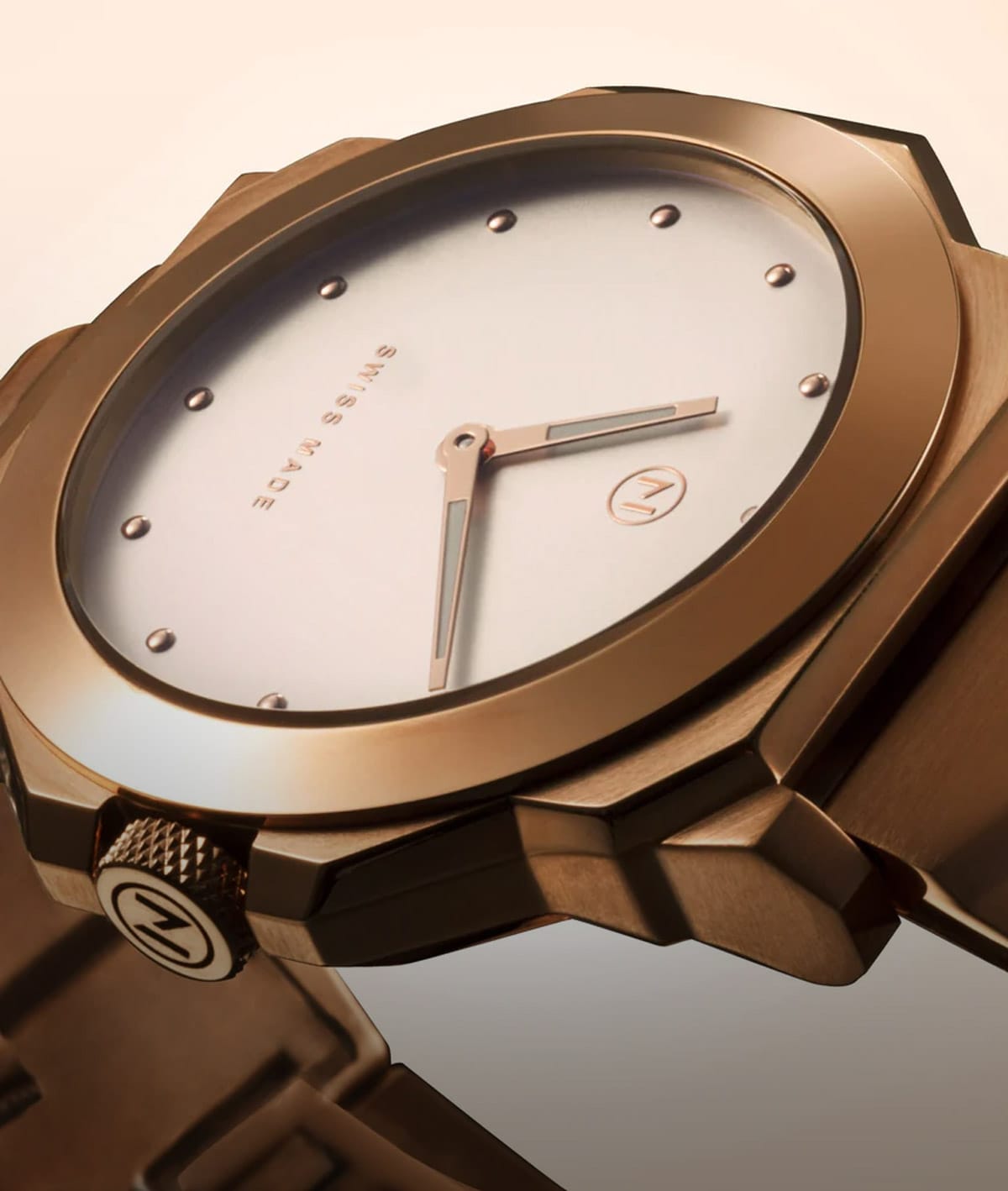
A watch should fit not only your wrist, but your life. For formal occasions and professional settings, a 36 to 40 mm case with a restrained dial often offers effortless refinement. It complements tailored clothing without competing for attention.
For daily wear, 39 to 42 mm is a compelling range. It has enough visual confidence for casual clothing while remaining versatile across work, travel, and evening plans. A steel bracelet can make the same case feel more substantial, while a leather or rubber strap may soften its profile.
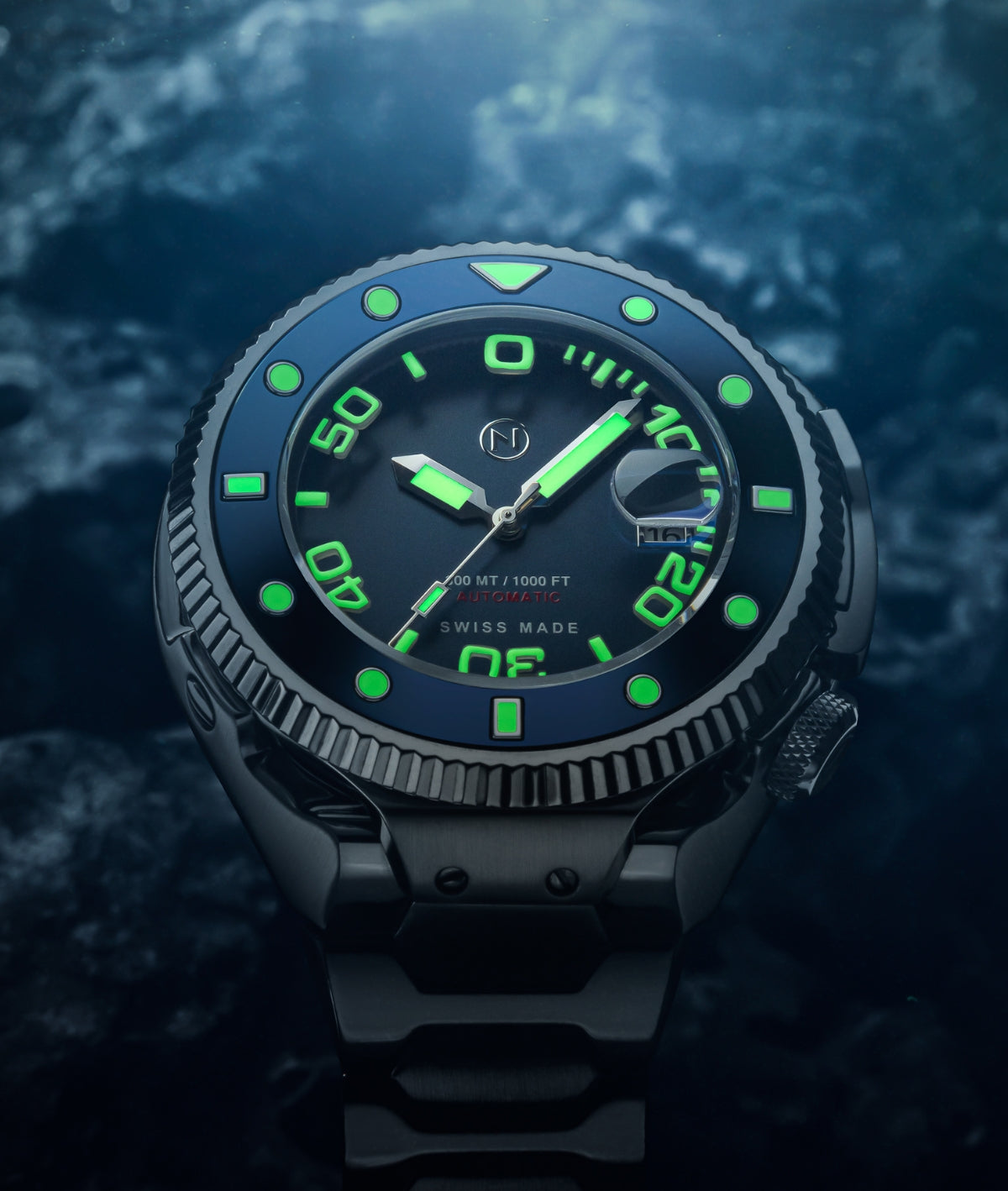
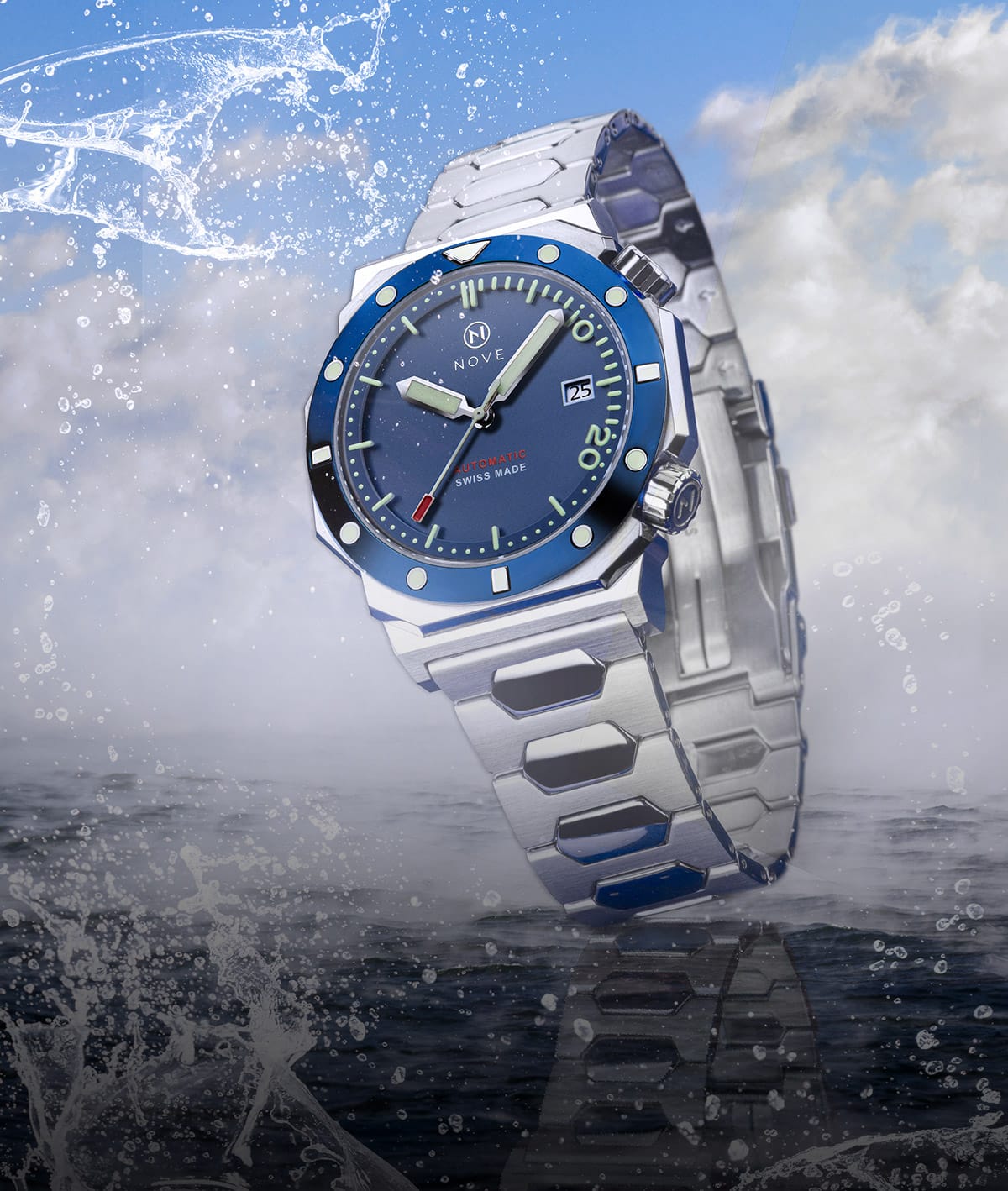
Dive watches are built with a different kind of authority. Their bezels, luminous markers, protective cases, and water-ready construction naturally create more visual mass. A 40 to 43 mm dive watch is a strong choice for someone who wants performance-minded engineering and a more commanding silhouette. Brands such as NOVE make this bolder design language part of the experience, pairing Swiss craftsmanship with cases designed to be seen.
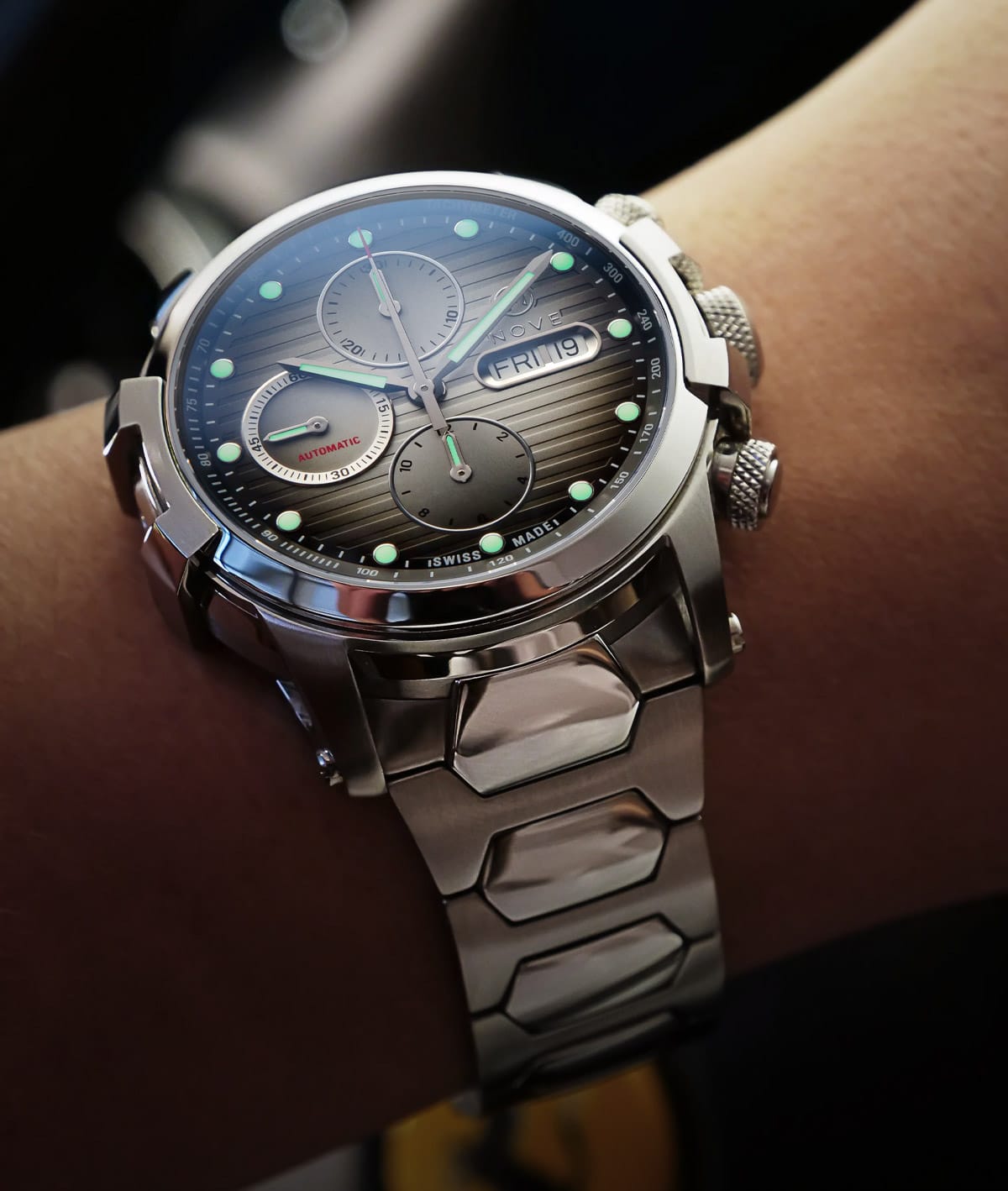
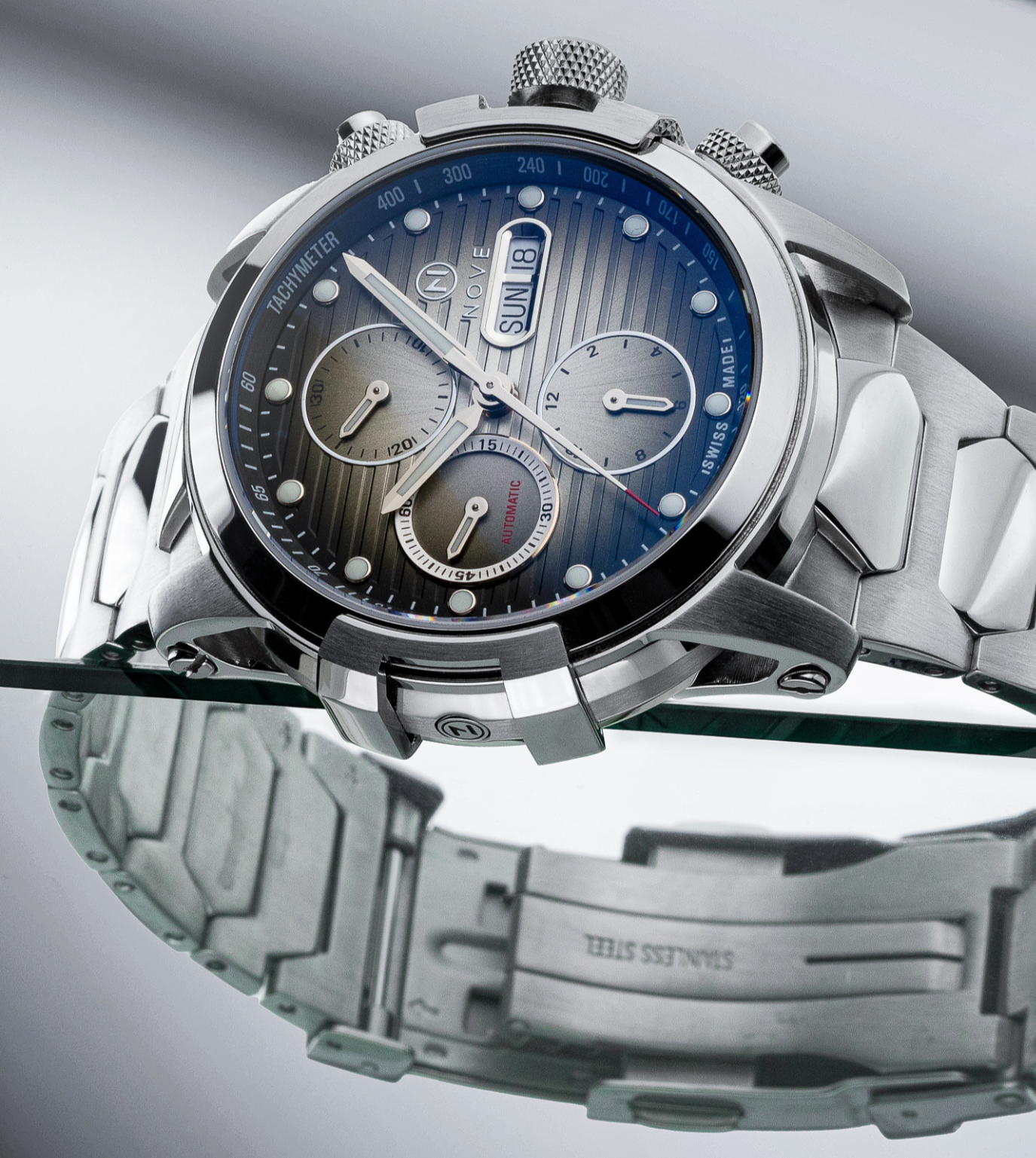
Chronographs deserve their own consideration. Subdials, pushers, and tachymeter scales add complexity, so a chronograph often benefits from a little more diameter. A 41 or 42 mm chronograph can look purposeful where a smaller case may feel crowded. Still, a compact lug-to-lug measurement keeps it from becoming overwhelming.
Do Not Ignore Strap and Bracelet Fit
The strap is half the wearing experience. A watch head that looks perfectly sized can feel awkward when paired with the wrong bracelet or strap width. As a rule, a strap should look proportionate to the case rather than unusually narrow or broad. A 20 mm strap is common on watches around 38 to 40 mm, while 22 mm straps often support larger sport cases.
Bracelets add visual weight because they carry the watch’s material across the wrist. A fully brushed steel bracelet usually makes a piece feel more athletic and substantial. A tapered bracelet, which narrows toward the clasp, can make a larger watch feel more elegant and less imposing.
Fit should be secure without leaving deep marks in your skin. You should be able to slide one finger beneath the bracelet or strap, but the watch should not spin freely around your wrist. If you are between links, micro-adjustments at the clasp can make the difference between a watch you admire and one you wear every day.
How to Test Size Before You Commit
Trying a watch on is ideal, but online shopping does not have to be a guessing game. Cut a paper circle to the listed case diameter and place it on your wrist. Then compare it with the stated lug-to-lug length by marking that distance on paper. It is a simple exercise, but it quickly reveals whether the watch will stay within your wrist’s boundaries.
Photographs can also be misleading. Close-up product images exaggerate a case, while mirror photos taken from too near the wrist can do the same. When you try on a watch, look at it in a mirror from a few feet away. That is closer to how others will see it, and it is the perspective that matters most.
Give yourself a few minutes before deciding. Move your wrist, bend your arm, and imagine the watch with the clothes you wear most often. A timepiece should feel intentional, never tentative.
Choose Presence, Not Just a Number
The best-fitting watch is not always the smallest one that stays inside your wrist, nor the largest one you can technically pull off. It is the one whose proportions support its design. A compact automatic may communicate quiet precision. A sculptural dive watch may express a more daring appetite for adventure. Both can be exactly right.
Let the watch earn its place on your wrist. When its case sits centered, its lugs follow your wrist’s shape, and its design feels like an extension of your own standards, size stops being a specification and becomes part of the statement.