
A watch can be exquisitely engineered, finished with a brilliant dial, and powered by a Swiss movement worthy of admiration. But if its proportions feel wrong on the wrist, the connection never quite happens. This Swiss watch case sizes guide helps you look beyond a single diameter number and choose a timepiece that feels deliberate, balanced, and distinctly yours.
Case size is not about following a rulebook. It is about how a watch wears: the way its lugs frame your wrist, how its thickness catches the light, and whether its presence matches the way you dress and move through the world. A bold dive watch should feel capable. A refined everyday model should feel effortless. The right size turns both into a personal signature.
Swiss Watch Case Sizes Guide: Start With Diameter
Case diameter is the measurement most people see first. Taken straight across the watch case, excluding the crown, it provides a useful starting point for comparing models. Yet it is only one part of the picture.
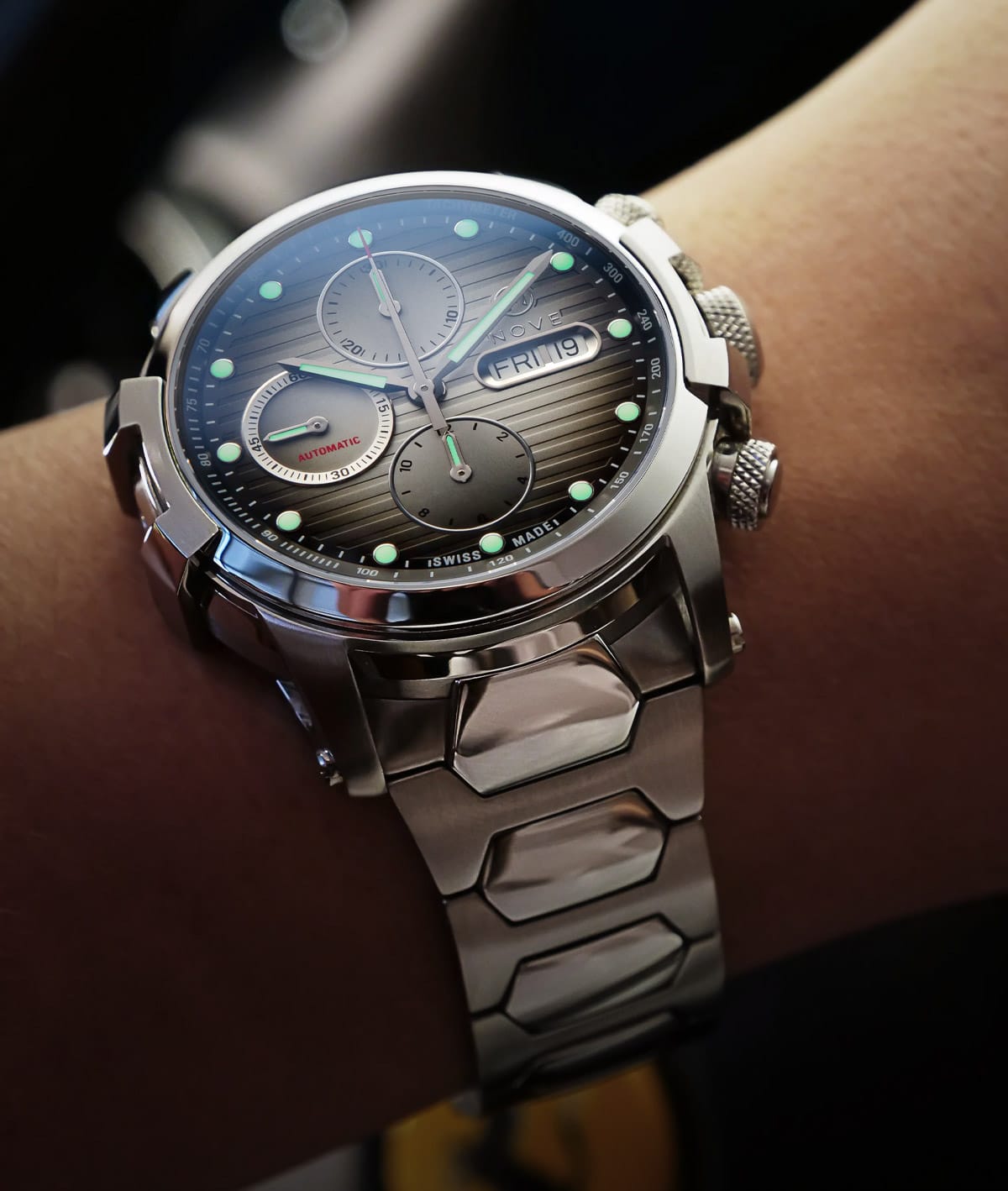
For many adult wrists, watches between 38 mm and 42 mm offer a versatile range. A 38 mm to 40 mm case often carries a classic, composed character. It can slide beneath a cuff, complement tailored clothing, and give a polished presence without commanding the entire wrist. At 41 mm to 42 mm, a watch becomes more assertive - a natural fit for sport watches, chronographs, and statement designs with broad dials or strong bezels.
Larger cases, usually 43 mm and above, bring undeniable impact. They can suit larger wrists beautifully and give dive watches the visual authority their tool-watch heritage calls for. They also make sense for anyone who prefers a timepiece to be noticed. The trade-off is versatility: a large case may feel less at home with formal attire or on a slimmer wrist.
Smaller watches are not automatically delicate, and larger watches are not automatically powerful. Dial design changes the perception of size. A dark, uncluttered dial can make a 42 mm watch appear more restrained, while a bright dial, thin bezel, and expansive markers can make a 40 mm case seem larger than its specifications suggest.
Measure Your Wrist, Then Read the Proportions
Before choosing a case size, measure your wrist circumference with a flexible tape measure or a strip of paper. Record the result in inches or millimeters at the point where you normally wear a watch.
As a general reference, wrists below 6.5 inches often find 36 mm to 40 mm especially comfortable. Wrists around 6.5 to 7.25 inches can wear an exceptional range, from a compact 38 mm dress watch to a substantial 42 mm diver. Wrists above 7.25 inches may gravitate toward 40 mm to 44 mm cases, particularly when the watch has a broad stance or a high-performance profile.
These ranges are guides, not limits. Wrist shape matters as much as circumference. A flat, broad wrist can carry a larger case than a rounded wrist of the same measurement. More importantly, look at the width of the top of your wrist. If the lugs extend beyond its edges, the watch is likely too large, no matter what the diameter says.
Trying on a watch is ideal, but a simple paper template can help when shopping online. Cut a circle matching the case diameter, place it on your wrist, and use it to sense the visual scale. It will not account for case shape or thickness, yet it can quickly reveal whether you are considering a subtle companion or a true statement piece.
Lug-to-Lug Is the Measurement That Changes Everything
Lug-to-lug refers to the distance from the tip of one set of lugs to the other. It determines the actual footprint of the watch across your wrist and is often more revealing than diameter.
A 42 mm watch with compact, downward-curving lugs may wear with surprising restraint. Another 40 mm model with long, straight lugs can feel larger and less comfortable. This is why two watches with the same stated diameter may have entirely different wrist presence.
For a balanced fit, keep the lug-to-lug measurement within the flat surface of your wrist. Many wearers find that 46 mm to 49 mm works well as an everyday range, while 50 mm and above begins to create a more expansive, sport-focused silhouette. Curved lugs can make a larger watch sit close to the wrist, adding comfort and visual refinement at the same time.
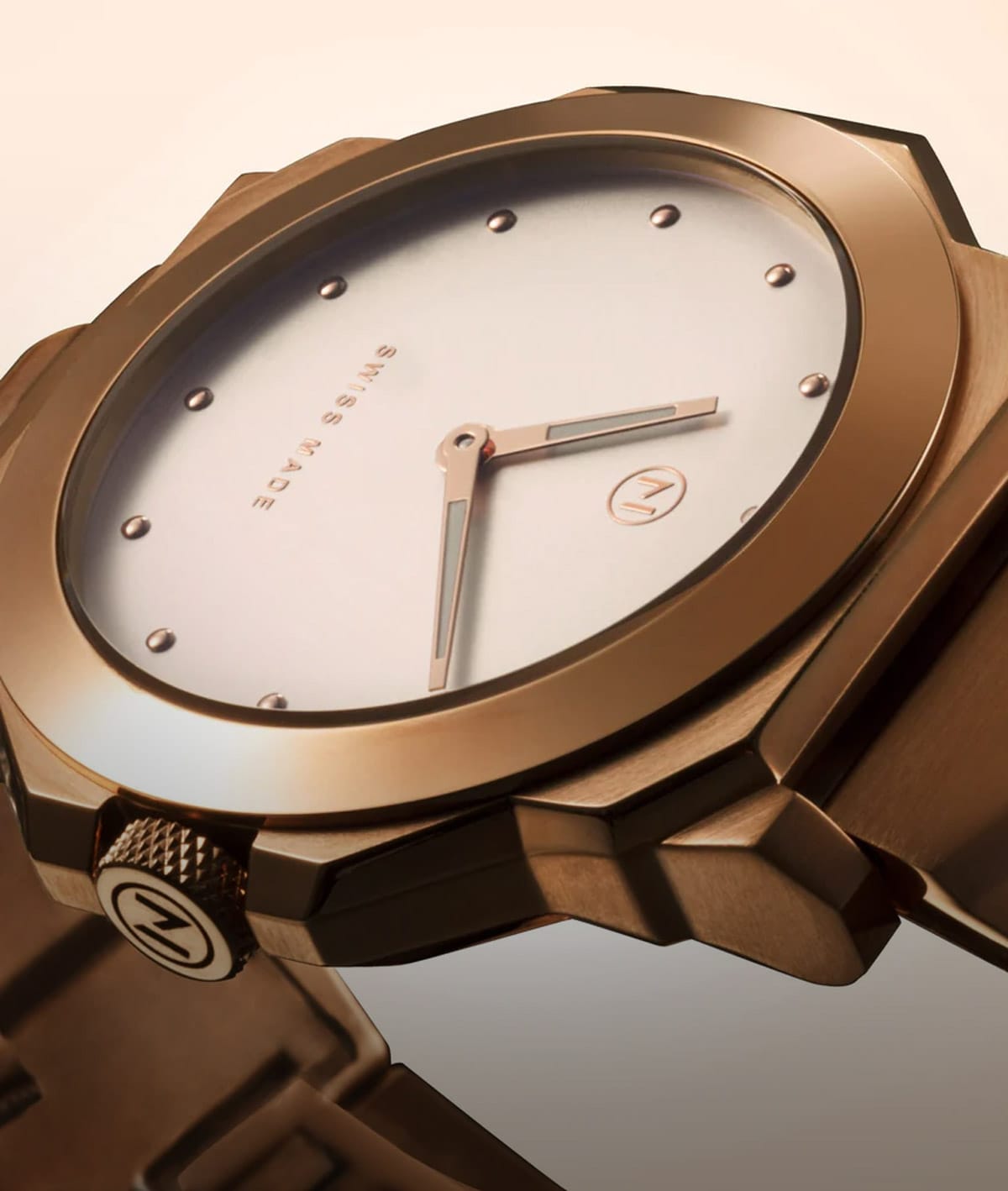
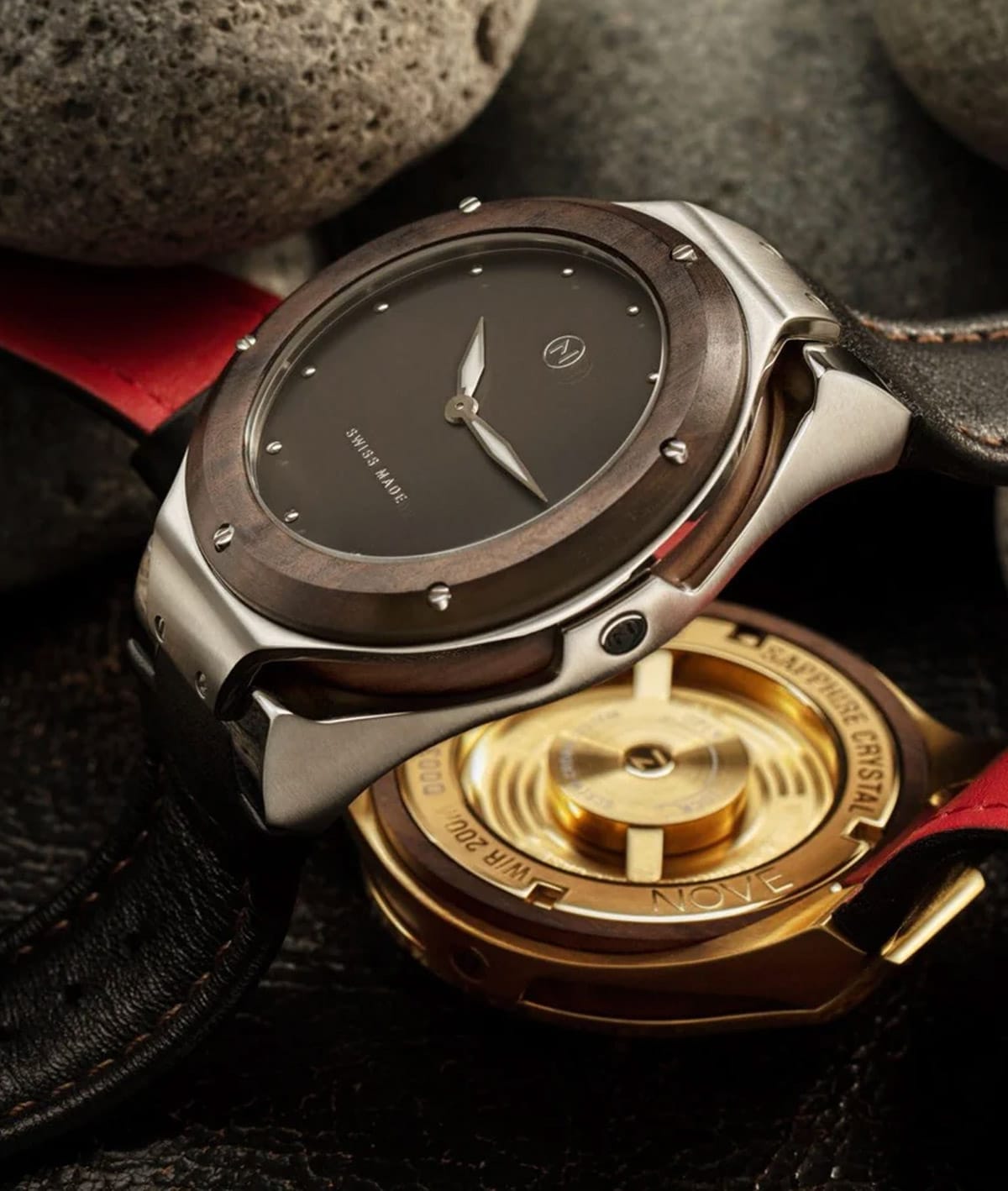
Case architecture matters here. Cushion cases, tonneau shapes, integrated bracelets, and angular bezels each occupy space differently. A round case is familiar and easy to compare, but an unconventional silhouette can make a watch feel like a work of art rather than a standard accessory. That individuality is part of the appeal - provided the proportions still honor your wrist.
Thickness Defines Comfort and Character
Case thickness is easy to overlook until a watch meets the edge of a shirt cuff or feels top-heavy during a long day. Slim models, generally around 8 mm to 11 mm, offer elegance and easy wear. They are particularly suited to formal settings, travel, and anyone who prefers a quieter profile.
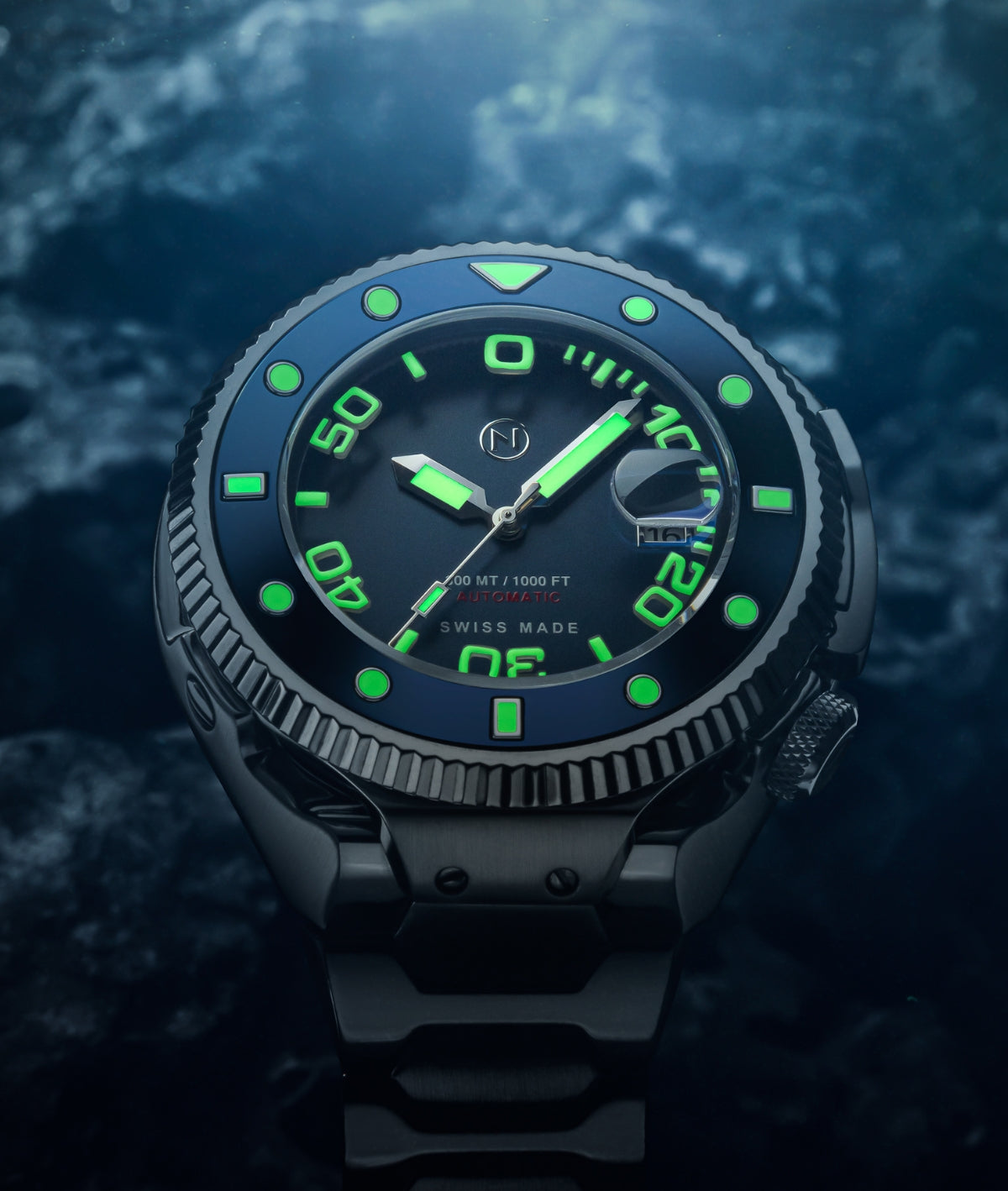
Sport watches are often thicker for good reason. Water resistance, automatic movements, rotating bezels, shock protection, and substantial crystals all require space. A dive watch around 12 mm to 14 mm can feel purposeful rather than bulky when its caseback is shaped to nestle into the wrist and its strap or bracelet is properly balanced.
The question is not simply whether a watch is thin or thick. Consider the relationship between its thickness and diameter. A 39 mm case that is 14 mm thick may feel compact but tall. A 43 mm case at 12 mm may wear broad yet relatively low. Neither is inherently better. The choice depends on whether you want understated refinement, technical presence, or a confident blend of both.
Choose a Size That Suits the Watch’s Purpose
A watch should look at home in its own category. Dress-oriented pieces often benefit from moderate diameters, slimmer cases, and restrained lug profiles. Their job is to complement the wearer, not compete with the tailoring.
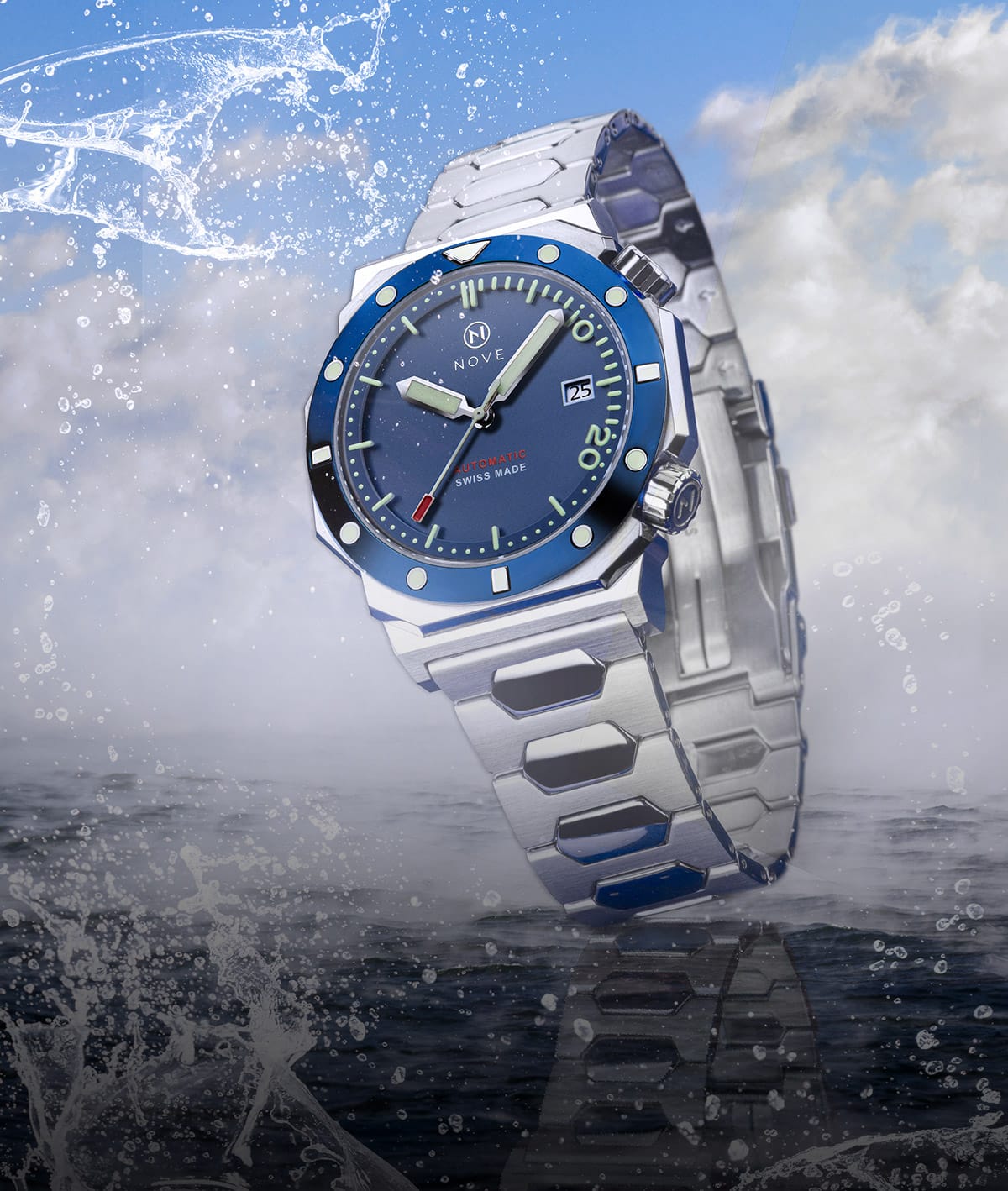
Dive watches are built around legibility and performance. A 40 mm to 44 mm case gives a bezel, bold hands, luminous markers, and a durable construction room to do their work. For underwater functionality and everyday impact, a little more scale can be exactly right.
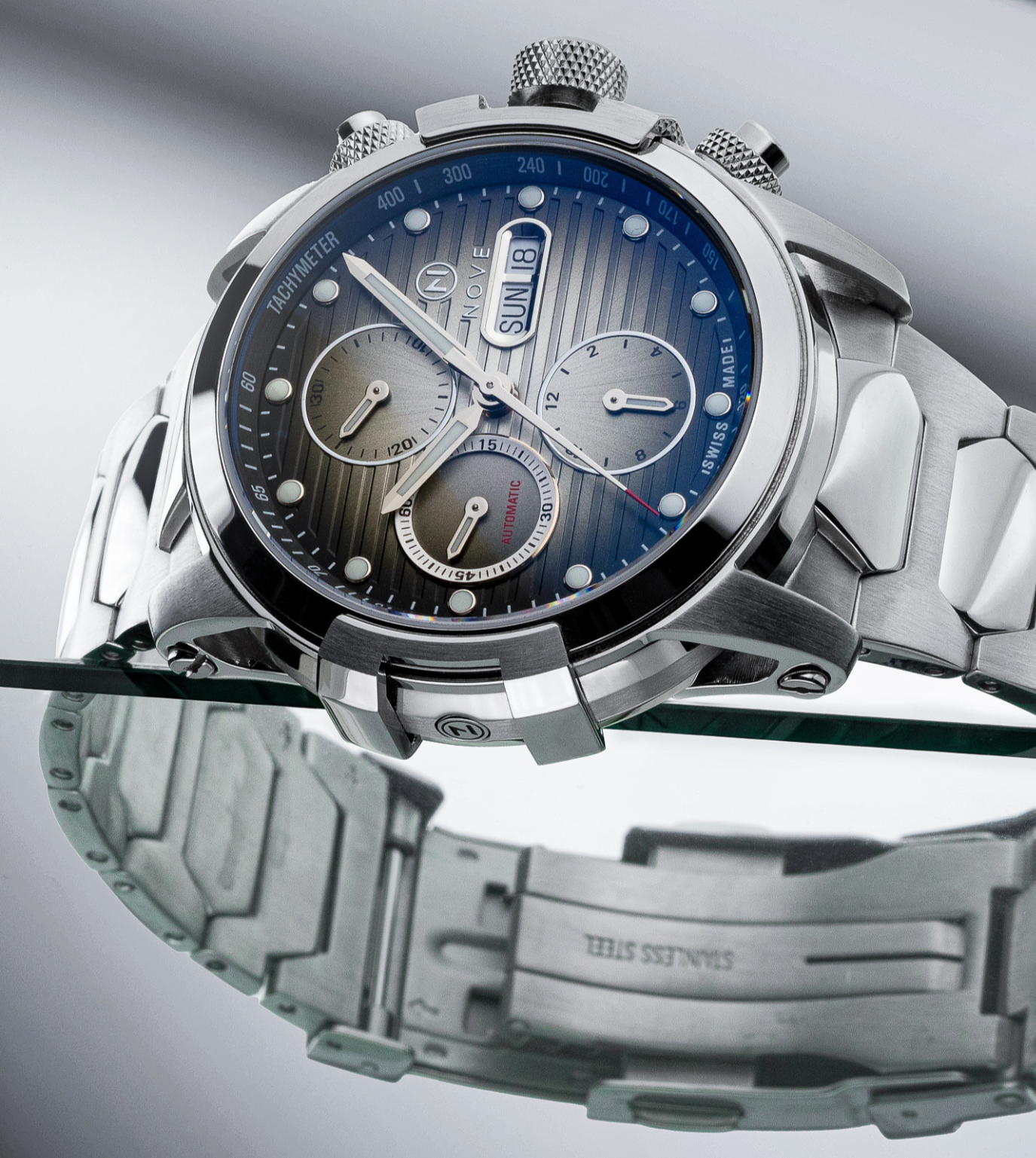
Chronographs tend to wear larger because their subdials, pushers, and movement architecture add visual and physical complexity. If you prefer a chronograph with a more refined feel, focus on compact lug-to-lug dimensions and a dial that leaves breathing room around the registers.
For an everyday Swiss watch, versatility usually wins. A well-proportioned 39 mm to 42 mm model can move from a morning meeting to an oceanfront weekend without losing its sense of occasion. This is where design becomes more than decoration: strong geometry, thoughtful finishing, and a distinctive dial can create presence without relying on oversized dimensions.
Straps and Bracelets Alter the Fit
The same watch can feel entirely different on a bracelet, rubber strap, or leather band. A steel bracelet adds weight and visual continuity, often making the case appear more substantial. It also offers a precise, architectural look that works especially well with sport and statement watches.
Rubber straps bring a dive watch closer to its adventurous roots. They are light, comfortable, and often make a larger case easier to wear because they hug the wrist without adding bulk. Leather softens a watch’s profile and can make even a bold case feel more polished.
Pay attention to strap width as well. A 20 mm strap on a 40 mm case tends to look classic and balanced. Wider straps enhance a muscular, contemporary stance; narrower straps can make a large case look top-heavy. The best pairing feels intentional from every angle.
Let Personal Style Have the Final Word
There is no prestige in choosing a watch that feels like someone else’s decision. If you favor clean tailoring, a compact case with disciplined proportions may express confidence more powerfully than sheer size. If your style leans architectural, adventurous, or unapologetically bold, a larger dive-inspired case can become the defining detail of your look.
At NOVE, Swiss craftsmanship and unconventional design meet in watches made to hold their own. The ideal case size is the one that gives that design its proper stage - secure on the wrist, comfortable through the day, and impossible to mistake for ordinary.
Wear the proportions that make you look down at your wrist with the same satisfaction you felt when you first chose the watch. That is the fit worth keeping.