

It’s one of the most common myths in the watch world: you see “30 Meters” on a watch dial and assume you can dive to the bottom of a 30-meter pool.
The truth? If you jump into a pool with a 30m watch, you might be heading straight to a repair shop.
In the watch industry, "Waterproof" is a term we rarely use because, technically, no watch is impenetrable forever. Instead, we use Water Resistance—measured in ATM (Atmospheres). Here is your guide to what those numbers actually mean for your lifestyle.
The ATM Cheat Sheet: Real-World Use
The ratings on your watch are based on static pressure tests in a lab. In the real world, moving your arm through the water (dynamic pressure) increases the stress on the seals. Here is how to read your watch dial:
| Rating | What it says | What it actually means |
| 3 ATM | 30 Meters | Splash-proof only. Fine for rain or washing hands. Keep it away from the shower. |
| 5 ATM | 50 Meters | Surface swimming. Okay for a quick dip in the pool, but avoid diving. |
| 10 ATM | 100 Meters | Snorkel-ready. Great for swimming, surfing, and snorkeling. |
| 20 ATM+ | 200 Meters | Diver grade. Safe for scuba diving and high-impact water sports. |
Why NOVE is Different: The Engineering of 20 ATM
Usually, a 20 ATM (200m) water-resistant watch is thick, bulky, and heavy. Traditional brands use thick cases to withstand the crushing pressure of the deep.
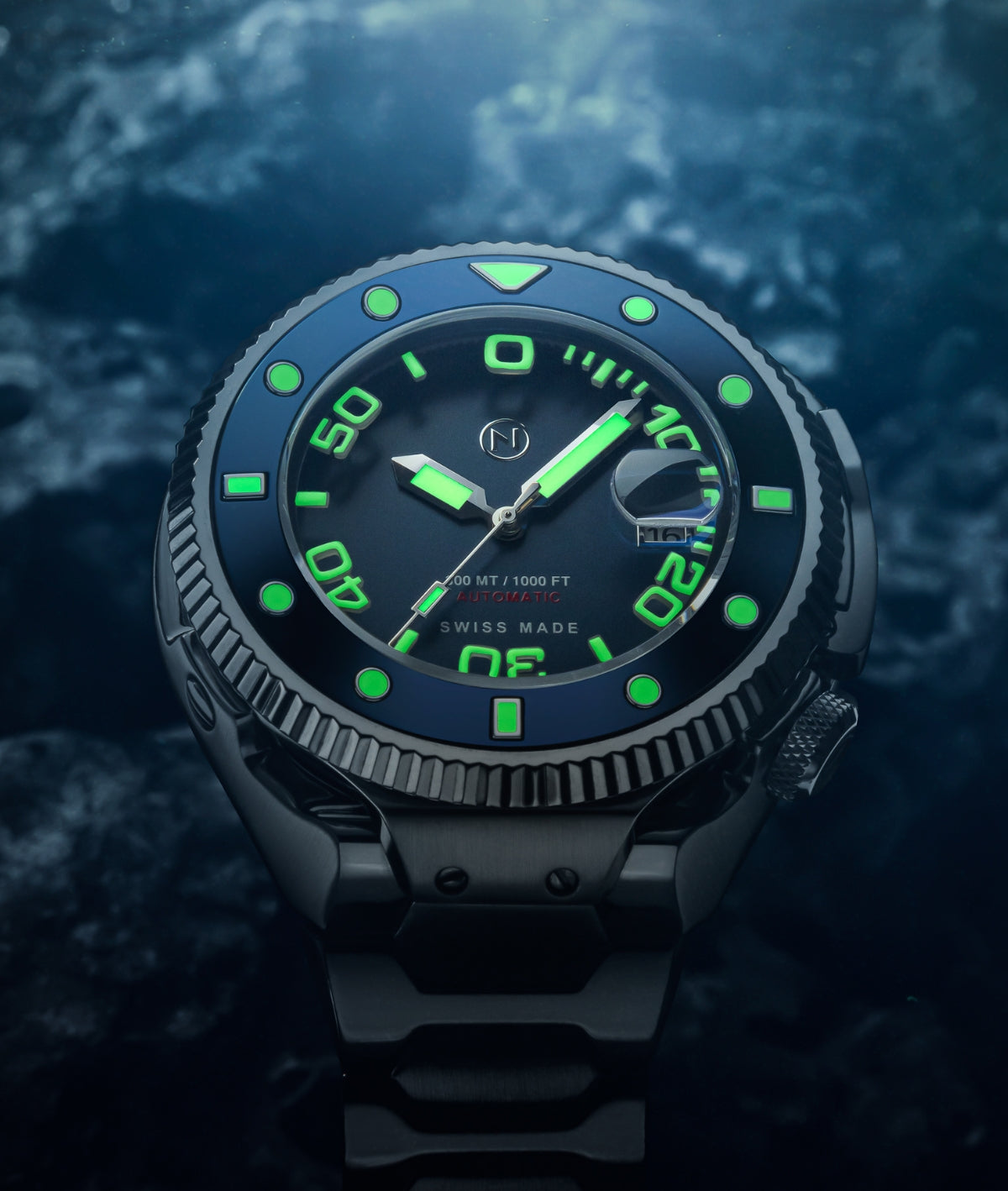
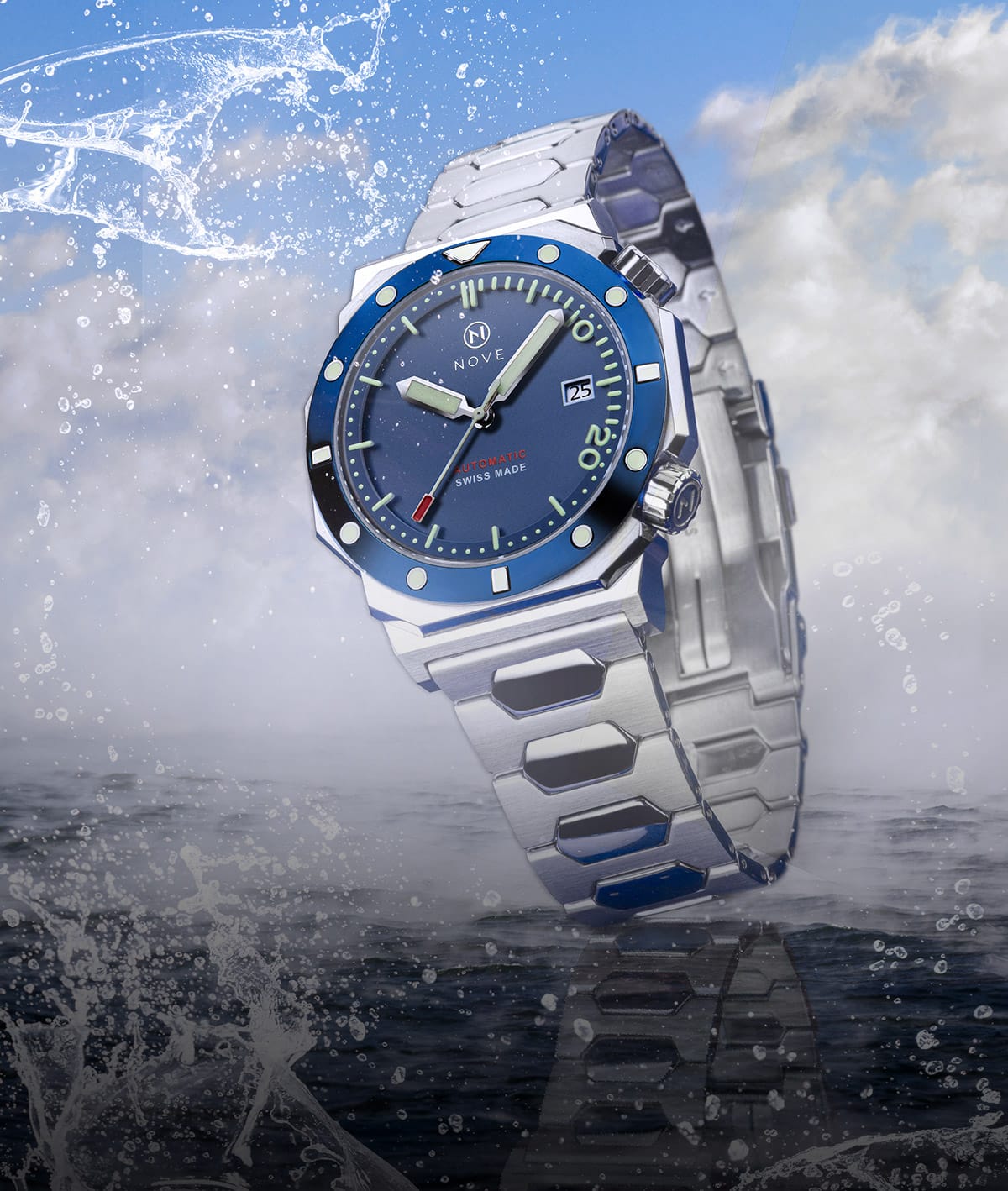
At NOVE, we challenged this convention. Our engineers developed the Trident—the world’s thinnest diver—which maintains a 200m water resistance at only 6.8mm thick. We achieved this through:
-
Screw-down Crowns: Creating a physical seal that must be threaded tight before entering the water.
-
Reinforced Gaskets: High-performance seals that don't require a "fat" case to stay watertight.
-
Patented Lever Systems: Our unique bezel design allows for full functionality without compromising the integrity of the slim case.
Three Rules to Protect Your Watch
Even the most rugged 20 ATM watch needs a little respect. To keep your NOVE ticking for decades, follow these three rules:
-
Screw it Tight: Always ensure your crown is fully screwed in before your watch touches water. This is your first line of defense.
-
Rinse After Salt: Saltwater is corrosive. After a day in the ocean, give your watch a quick rinse in fresh water to remove salt crystals.
-
Avoid the Steam: Hot showers and saunas are the enemies of water resistance. Heat expands the metal and can allow steam to penetrate seals that are otherwise watertight against liquid.
Looking for a watch that can handle the deep without the bulk? Explore the 200m-rated Trident Collection and experience Swiss engineering at its thinnest.