
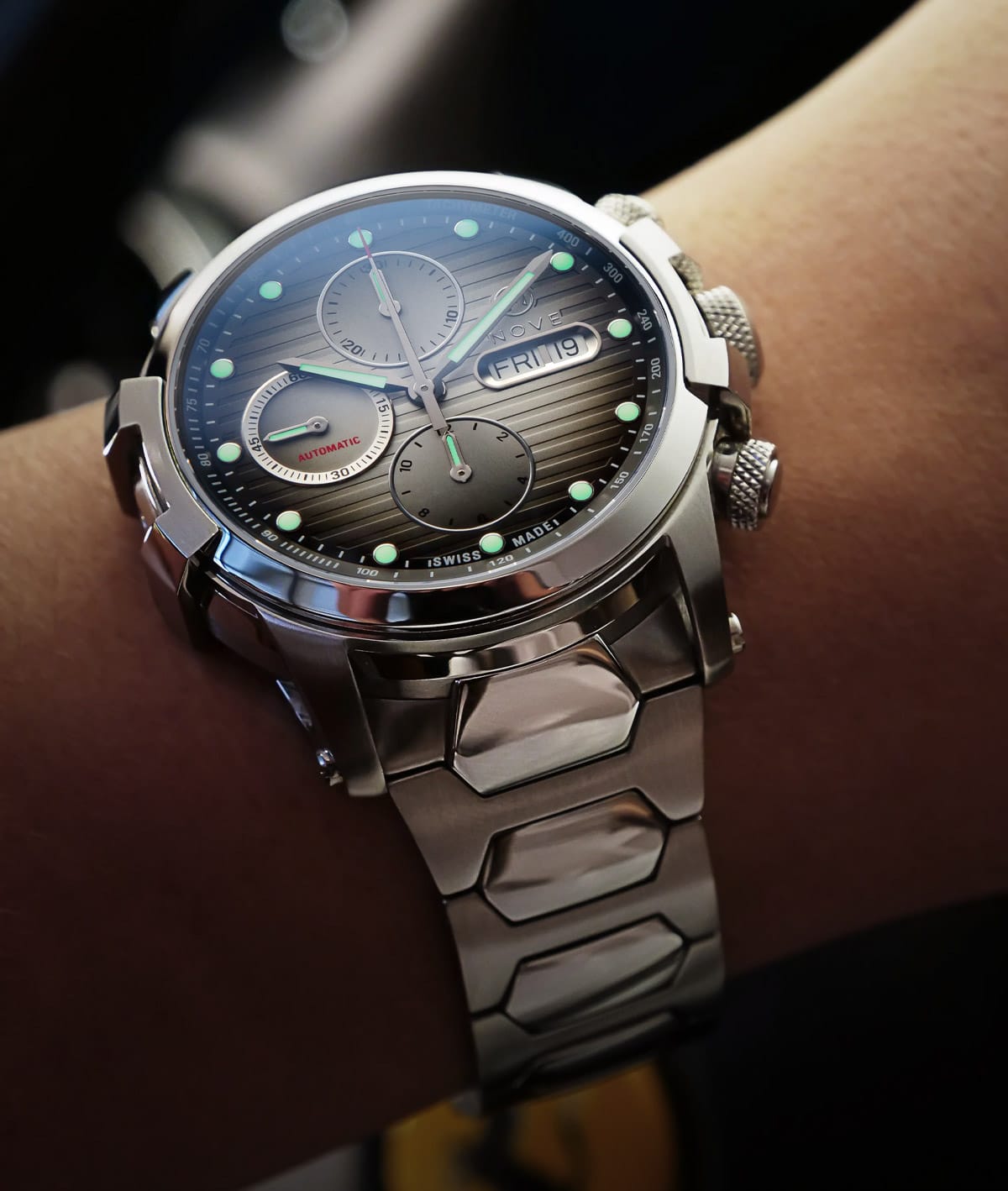


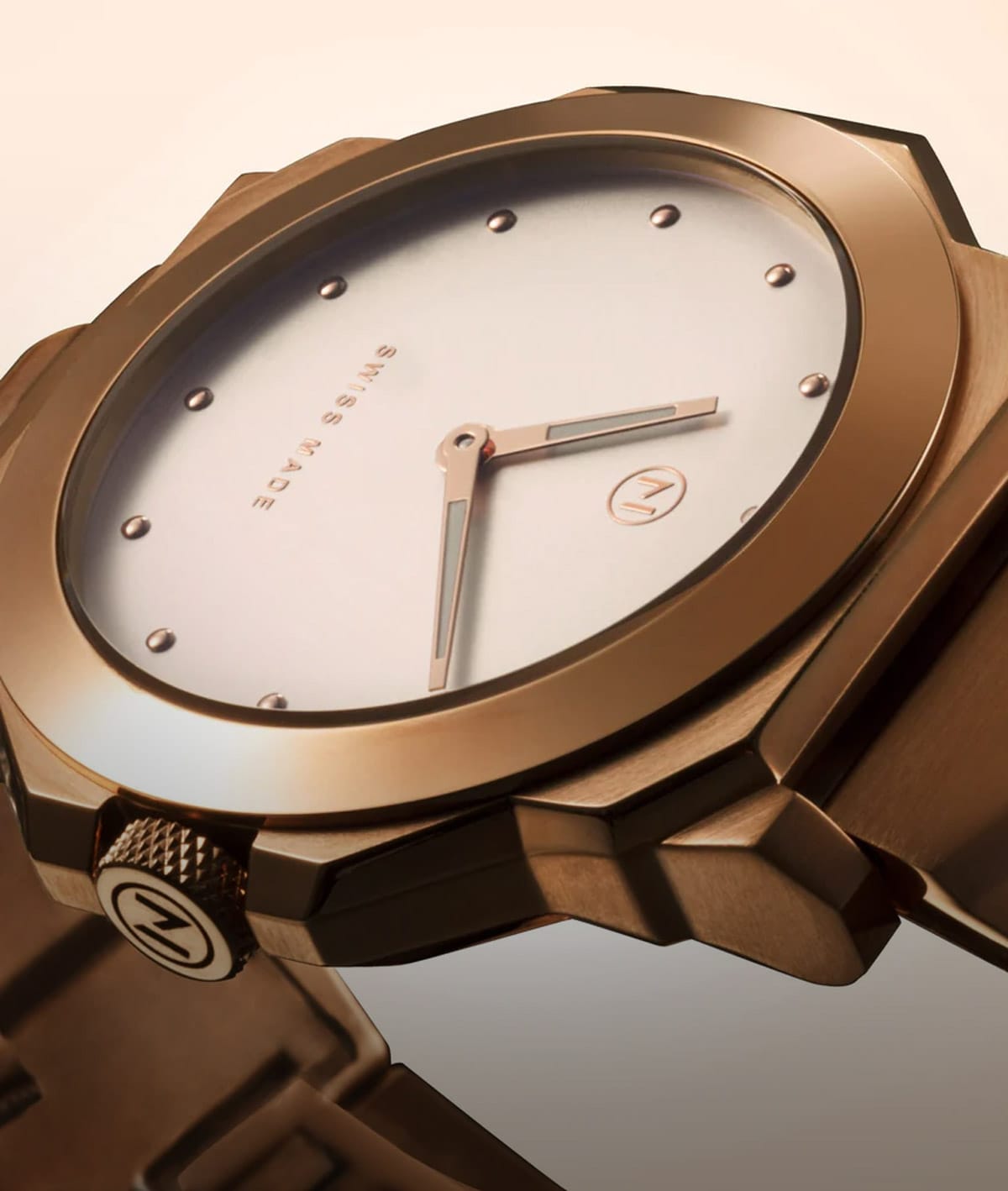

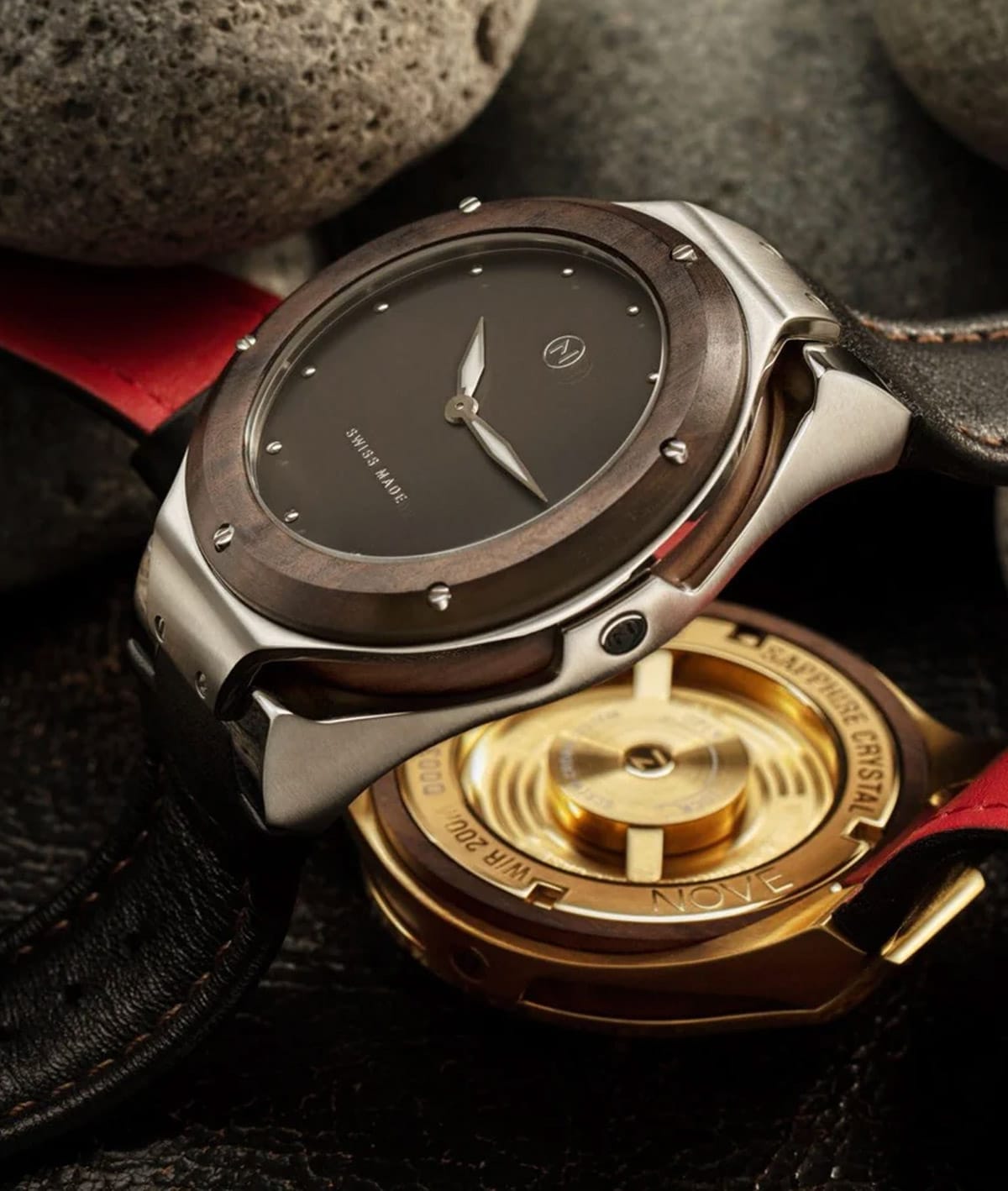
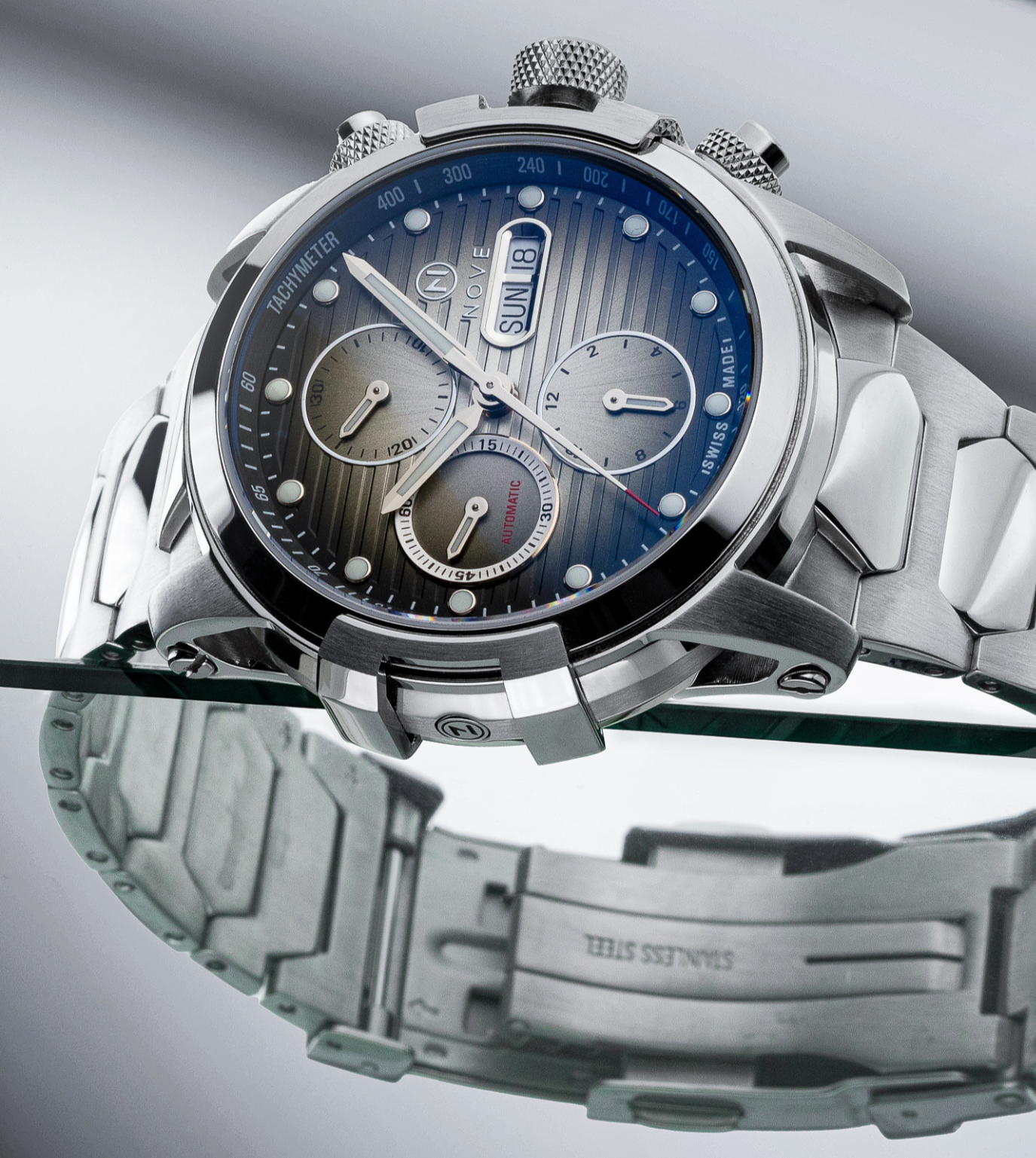
A fine automatic watch is designed to gather energy from motion, not to demand daily ritual. Yet after a weekend off the wrist, even the most capable mechanical timepiece can stop. Knowing how to wind automatic watches correctly protects the movement, preserves the crown, and gets your watch back into rhythm without unnecessary force.
For a Swiss-made dive watch or a bold everyday statement piece, this is more than a maintenance detail. It is a small act of ownership that connects you to the precision beneath the dial.
What Makes an Automatic Watch Run?
An automatic watch is powered by a mechanical mainspring. As you move your wrist, a weighted rotor inside the case swings and winds that spring through a series of gears. The stored energy is then released in controlled increments, driving the hands and keeping time.
Most automatic movements have a power reserve, commonly around 38 to 72 hours. Some remain running longer. If the watch sits unworn beyond its reserve, it simply stops. This is normal. It does not mean the movement is damaged, the battery is dead, or the watch needs repair.
Many modern automatic movements can also be hand-wound through the crown. That feature gives you a precise way to start a stopped watch before wearing it, rather than relying on a few exaggerated wrist shakes. It is a better-looking solution, too.
How to Wind Automatic Watches Safely
The right method depends on the crown construction, especially if your watch is built for the water. A screw-down crown, common on serious dive watches, must be released before winding and securely resealed afterward.
Start by taking the watch off your wrist. Winding while it is worn can put the crown at an awkward angle and place unnecessary sideways pressure on the stem. Hold the case securely between your fingers instead.
If the crown is screw-down, gently turn it counterclockwise until it releases and springs to its neutral winding position. Do not pull it out immediately. With the crown in this first position, turn it clockwise slowly and deliberately. Around 20 to 40 turns is usually enough to give a stopped automatic watch a healthy starting charge.
There is no need to count with obsessive precision. The goal is to put sufficient energy into the mainspring so the watch starts confidently and stays running as you begin wearing it. Once it is moving, set the time and date if needed. Then, for a screw-down crown, press it lightly toward the case and turn clockwise until it is fully threaded and secure.
Never force the crown. Resistance that feels abrupt, gritty, or unusual is your signal to stop. A crown should feel controlled and refined, not like a battle of strength.
A Note on Screw-Down Crowns
A screw-down crown supports water resistance only when it is properly secured. Before swimming, diving, or exposing your watch to spray, confirm that the crown is fully screwed in. An open crown can compromise the seal, even when the watch itself is engineered for serious depths.
Avoid operating the crown underwater or when the case is wet. Water droplets around the crown tube are not worth the risk. Dry the watch first, then make any adjustments on land.
Should You Shake an Automatic Watch to Start It?
A few gentle movements can wake a watch with a depleted power reserve, but vigorous shaking is not the preferred method. It is less controlled than hand-winding and adds no advantage once the movement is running.
Think of the rotor as a precision component, not a toy. A light side-to-side motion is enough to start the balance in some watches, but hand-winding through the crown is generally the more considered approach when available. Then wear the watch normally and let your movement do what the design intended.
If your watch does not allow hand-winding, consult its instructions before attempting anything aggressive. Some older or specialized movements behave differently, and the safest approach can vary.
How Often Should You Wind an Automatic Watch?
If you wear your automatic watch every day and your routine includes normal movement, you may never need to hand-wind it beyond the initial start. Walking, commuting, working, and living with the watch on your wrist typically maintain the power reserve.
Hand-winding is most useful when the watch has stopped after sitting in a watch box, when you rotate among several timepieces, or when your day is unusually sedentary. If you spend long hours at a desk, your natural wrist motion may not fully replenish the reserve. That does not make the watch unreliable. It simply means the movement is receiving less energy.
There is also no need to wind a functioning automatic every morning out of habit. Modern automatic movements are commonly designed with a slipping bridle that prevents the mainspring from being overwound through rotor motion. Still, repeated unnecessary crown use adds wear to the crown, stem, and threads over many years. Wind with purpose, not ceremony for its own sake.
Set the Time and Date With Care
After winding, pull the crown to the appropriate position to set the time. If your watch has a date display, take particular care around the date-change period. Many mechanical watches begin engaging their date mechanisms late in the evening and finish after midnight.
As a cautious rule, avoid quick-setting the date when the hands are between roughly 9 p.m. and 3 a.m. During that window, components inside the movement may already be preparing to advance the date. Forcing a quick date adjustment can damage delicate calendar parts in certain calibers.
A safer routine is to move the hands forward until the date changes, confirming that the watch has passed midnight. Then set the desired date and time. It takes a moment longer, but a mechanical movement rewards patience.
What a Watch Winder Can and Cannot Do
A watch winder rotates an automatic watch while it is off the wrist, helping maintain its power reserve. It can be useful for a multi-watch collection, especially for models with complicated calendars that take time to reset. It can also keep a favorite timepiece ready for an unplanned trip or an important evening.
But a winder is optional, not essential. A stopped automatic watch is not a neglected automatic watch. In fact, allowing a simple time-and-date model to rest between wears is perfectly reasonable.
If you choose a winder, use one with adjustable rotation direction and turns per day. Too much movement is unnecessary. The ideal setting depends on the caliber, so follow the watchmaker's recommendations when they are available. A well-made watch winder should be quiet, stable, and gentle enough to suit the level of craftsmanship it is supporting.
Signs You May Need Professional Service
An automatic watch should not require constant attention. If it stops after only a few hours of regular wear, loses or gains significant time suddenly, makes unusual scraping sounds, or has a crown that will not thread properly, it deserves inspection.
Condensation under the crystal is more urgent. Moisture inside a watch can affect the dial, hands, movement, and seals. Keep the crown secured, avoid further water exposure, and have the watch assessed promptly.
Periodic service is part of owning a mechanical timepiece. Lubricants age, gaskets need renewal, and a movement built from finely tuned components benefits from an experienced watchmaker's care. The service interval varies by movement, usage, and exposure to water or impact, so follow your manufacturer’s guidance rather than treating one schedule as universal.
The Ritual Is Part of the Reward
Automatic watch ownership asks for a little awareness, but that is precisely where much of its appeal lives. A quartz watch offers instant convenience. An automatic watch offers a living mechanism, powered by your movement and sustained by generations of Swiss horological ingenuity.
Whether you wear a sculptural NOVE dive watch for the ocean, the office, or the hours between, a few careful turns of the crown are not a chore. They are the first movement in a personal ritual - one that keeps a precision-made object ready for whatever comes next.